
When homeowners ask, “how do ADU builders plan small spaces so they feel larger,” the answer starts with intentional ADU design. Accessory dwelling units may have limited square footage, but the right floor plans, natural light, built-in storage, and open floor plan choices can make a small ADU feel comfortable, efficient, and surprisingly spacious.
A well-planned accessory dwelling unit (ADU) can serve as a guest house, rental income opportunity, home office, or additional living space for extended family. Whether the goal is more space, flexible living arrangements, or improved property value, every design choice should maximize space and protect daily comfort.
Why Small ADU Design Requires Careful Planning
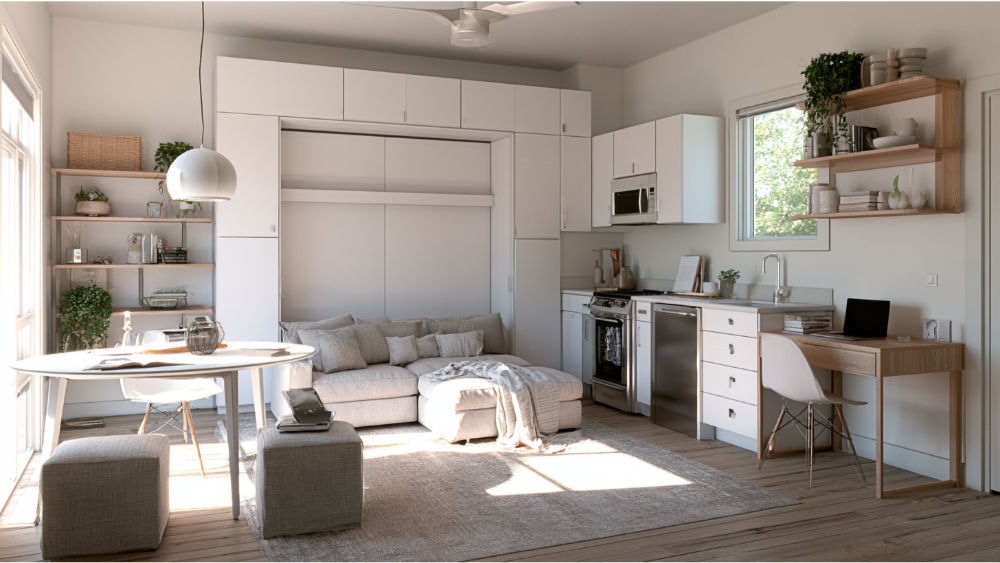
Small ADU projects require more precision than larger homes because every inch of space matters. Poor layouts can make spaces feel tight, while thoughtful planning can create a spacious feel even in limited square footage.
Every Square Foot Has a Purpose
In a small space, every square foot should support daily living. Strong ADU design removes unnecessary walls, awkward corners, oversized hallways, and bulky layouts that reduce usable space. Builders focus on floor plans that preserve floor space and create clear movement between living areas.
Function Comes Before Decoration
Finishes matter, but function comes first. A small ADU feels larger when the layout, storage solutions, windows, doors, utilities, and circulation are planned before construction begins. Light colors, simple finishes, and materials that reflect light can make a big difference, but they work best when the layout is already strong.
How ADU Builders Make Small Floor Plans Feel More Open
The best small ADU floor plans are simple, open, and efficient. Instead of dividing the unit into too many rooms, builders create living areas that serve multiple purposes.
Open-Concept Living Areas
An open floor plan is one of the most effective ways to maximize space. By combining the kitchen, dining area, and living space, builders create a spacious feel without adding square footage. An open floor plan also helps natural light travel farther through the home, making spaces feel brighter and less confined.
Smarter Room Placement
Bedrooms, bathrooms, and kitchens need to be placed carefully. Good ADU design protects privacy while keeping the main living areas open. Placing the bathroom near plumbing lines can save space and reduce construction complexity, while keeping bedrooms away from the main entry can create better privacy from the main house.
Fewer Hallways, Better Circulation
Hallways use valuable floor space without adding much function. Experienced builders often reduce or remove unnecessary circulation areas so more floor space can be used for daily living. This helps maximize space and makes the small ADU feel more practical.
Using Natural Light to Make an ADU Feel Bigger
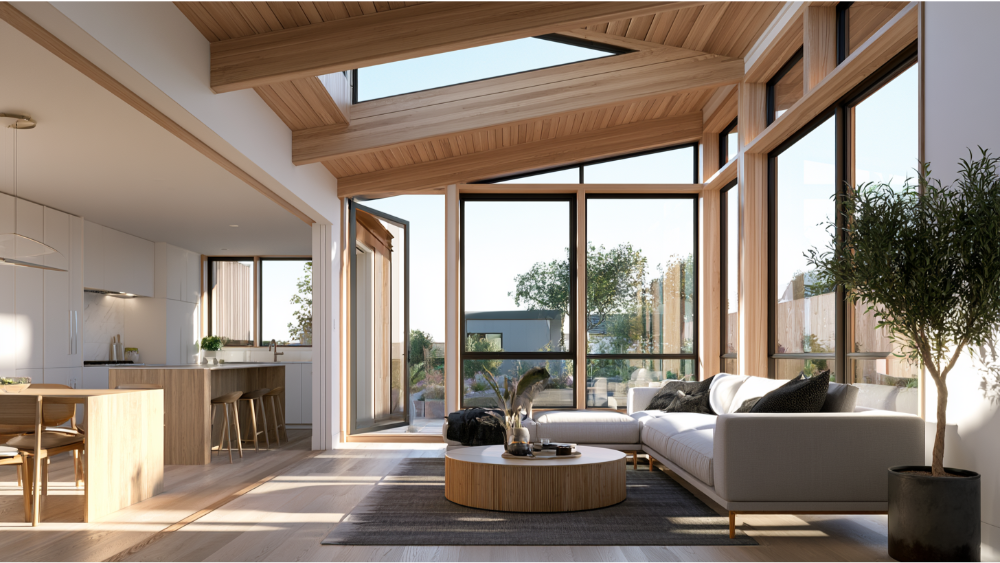
Natural light is one of the strongest design tools for making a small space feel larger. Bright rooms feel more open, more comfortable, and more connected to outdoor spaces.
Larger Windows in the Right Places
Large windows bring in ample natural light and help the eye travel beyond the walls. Builders place windows to maximize natural light while protecting privacy from neighbors and the primary residence. Light colors around windows can also reflect light and create a spacious feel.
Glass Doors and Outdoor Views
Glass doors, especially sliding doors, can make a huge difference in a small ADU. They visually extend the living space into patios, gardens, and outdoor spaces. This is especially useful in Sacramento, the Bay Area, and other California markets where indoor-outdoor living is highly valued.
Skylights and High Windows
Skylights, clerestory windows, and high windows bring natural light into areas where standard windows may not work. They are especially helpful in bathrooms, kitchens, and loft space designs where privacy matters.
Creating Indoor-Outdoor Flow
Outdoor connections help a small ADU feel like it has more space. A compact unit can feel much larger when the living areas open toward a patio, deck, garden, or courtyard.
Patios, Decks, and Courtyard Connections
A patio or deck creates added space for relaxing, dining, or entertaining. Even a modest outdoor area can serve multiple purposes and make the ADU feel less enclosed.
Aligning Doors, Windows, and Sightlines
Good ADU design uses sightlines to make spaces feel deeper. When the entry, living space, windows, and sliding doors are aligned, the eye moves through the home instead of stopping at a wall.
Built-In Storage: The Secret to a Larger-Feeling ADU
Adequate storage is essential in any small ADU. Without storage space, clutter quickly takes over and causes the home to start feeling cramped.
Full-Height Cabinets and Closets
Built-in storage helps preserve floor space. Full-height cabinets, tall closets, and vertical storage solutions make use of vertical space instead of crowding the floor. This is one of the best ways to save space while keeping the home organized.
Under-Bench, Under-Stair, and Niche Storage
Hidden storage is especially valuable in compact homes. Builders can add hidden storage compartments under benches, under stairs, inside wall niches, and below seating areas. In bedrooms, under-bed storage can provide extra storage space without taking away valuable floor space.
Planning Storage Before Construction
Built-in storage solutions work best when they are planned early. Built-in shelves, built-in shelving, wall-mounted racks, and recessed cabinets look cleaner than freestanding furniture and help maximize space.
Choosing Multi-Use Features for Compact ADUs
Multi-functional design is essential in small ADU planning. The best features are flexible, compact, and useful for multiple purposes.
Flexible Living and Dining Areas
A dining table can also work as a desk. A kitchen island can provide prep space, seating, and storage. These multi-functional pieces help the living space adapt throughout the day.
Murphy Beds, Sleeper Sofas, and Convertible Furniture
Murphy beds, sofa beds, modular furniture, storage ottomans, and other multi-functional furniture can save space in studios and guest units. The right multi-functional furniture helps one room serve multiple purposes without feeling crowded.
Laundry Closets Instead of Laundry Rooms
A stacked washer and dryer in a closet is often a smart space-saving choice. It provides convenience without using square footage that could be better used for living areas.
How Ceiling Height and Vertical Design Affect Spaciousness
Vertical space has a major impact on how large a small ADU feels. When the eye moves upward, rooms feel taller and more open.
Taller Ceilings Where Feasible
High ceilings can create a spacious feel even when the footprint is compact. They add volume without requiring more square feet.
Vaulted Ceilings and Exposed Rooflines
In detached ADUs, vaulted ceilings or exposed rooflines can make a big difference. They are especially effective in open floor plan layouts and loft space designs.
Vertical Visual Lines
Tall cabinets, vertical tile, full-height curtains, and shelving that draws the eye upward all help maximize space. Vertical space should be treated as usable square footage, not wasted air.
Kitchen Design Strategies for Small ADUs
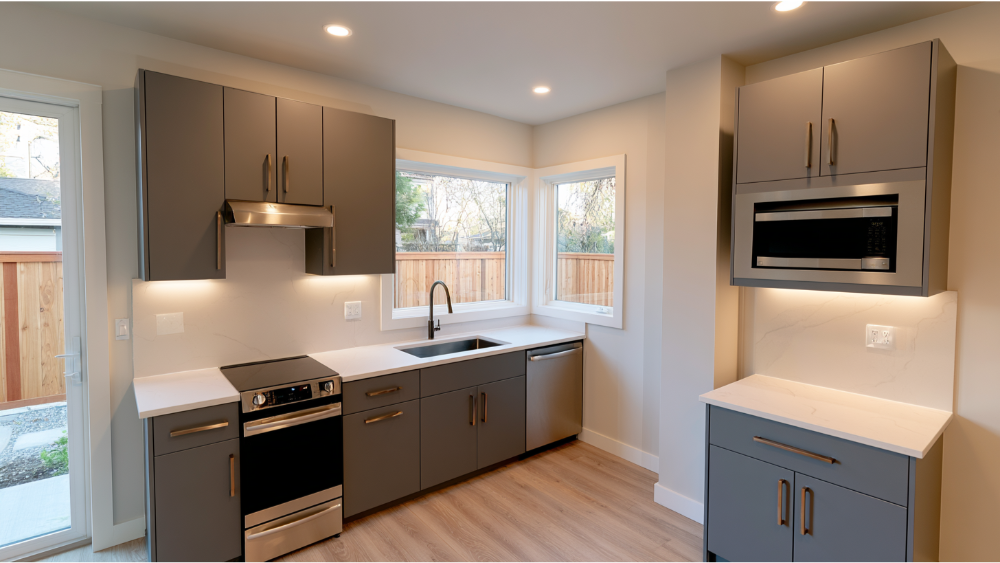
A small ADU kitchen should feel complete without overpowering the home.
Compact but Complete Kitchens
Compact appliances, efficient cabinets, and smart work zones help create a functional kitchen. The goal is to save space while still giving residents everything they need for daily use.
Galley, L-Shaped, and One-Wall Kitchens
Galley kitchens work well in narrow floor plans. L-shaped kitchens are useful for open floor plan designs. One-wall kitchens can be ideal when limited square footage requires a clean, simple layout.
Avoiding Oversized Fixtures
Oversized islands, appliances, and sinks can reduce floor space and make kitchens feel tight. Properly scaled fixtures help the kitchen support the living space instead of competing with it.
Bathroom Planning That Saves Space Without Feeling Tight
Bathroom design can make or break a small ADU. The right layout should feel clean, bright, and easy to use.
Efficient Fixture Placement
Toilets, vanities, and showers should be arranged to protect movement and comfort. Pocket doors are often a smart space-saving option because they do not swing into the room.
Walk-In Showers and Glass Enclosures
Walk-in showers with clear glass can reflect light and make the bathroom feel larger. This approach reduces visual barriers and helps avoid feeling cramped.
Recessed Storage and Wall-Mounted Vanities
Recessed medicine cabinets, shower niches, and wall-mounted vanities provide storage solutions without taking up floor space.
Privacy Strategies That Do Not Make the ADU Feel Closed In
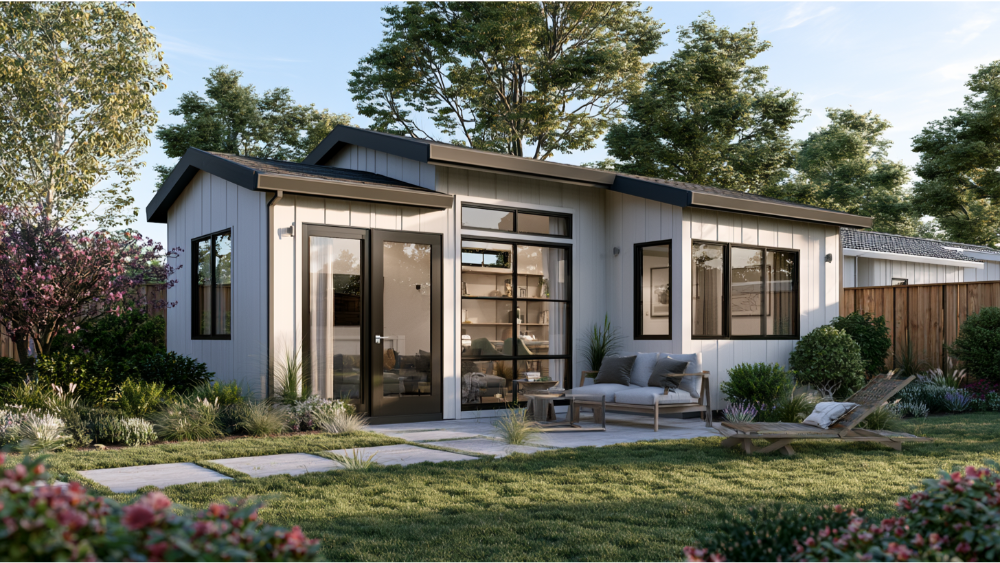
Privacy matters whether the ADU is used by family members, renters, or guests.
Window Placement for Light and Privacy
Builders use window placement to bring in natural light while limiting views into the main house, neighboring homes, or private yards.
Pocket Doors and Sliding Doors
Pocket doors and sliding doors save space and improve flow. They work well for bathrooms, closets, bedrooms, and laundry areas.
Partial Walls and Visual Separation
Partial walls, shelving, and furniture placement can separate living areas without closing off the room. This keeps the open floor plan intact while giving each area a clear purpose.
Why Experienced ADU Builders Plan Around Permits Early
Building accessory dwelling units requires more than a good layout. Builders must also consider local rules, utilities, setbacks, access, and construction requirements.
Setbacks and Lot Conditions
The lot shape affects the ADU design, including window placement, entries, outdoor spaces, and total square footage. This is true in Sacramento, the Bay Area, and communities throughout California.
Utility Planning
Plumbing, electrical, HVAC, sewer, and drainage decisions all affect the final layout. Early planning helps protect usable space and avoid costly redesigns.
Avoiding Costly Redesigns
An ADU is a significant investment. Planning around permits early helps homeowners avoid delays, control costs, and protect property value.
Common Mistakes That Make Small ADUs Feel Smaller
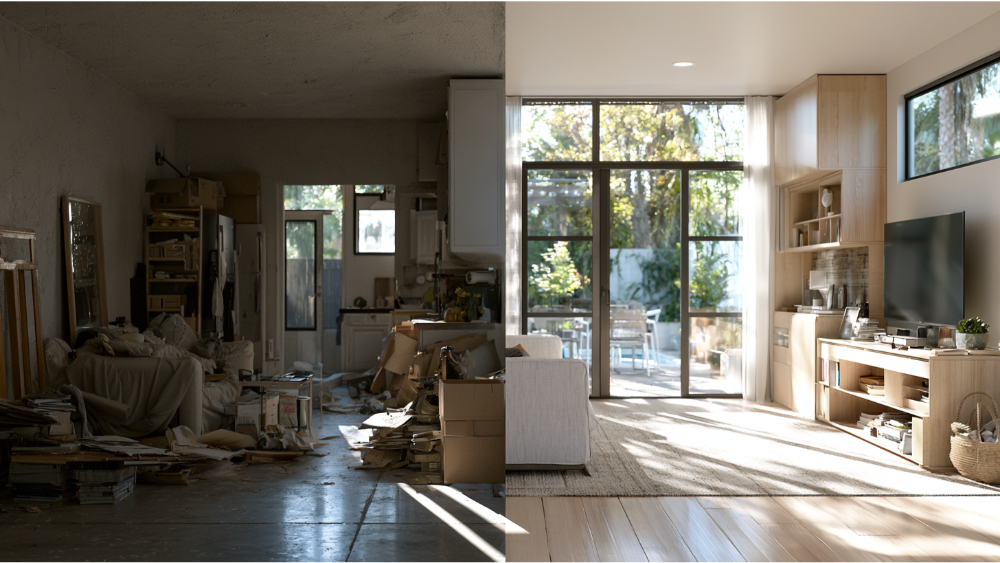
Even a well-built small ADU can feel cramped if the design choices are not carefully planned.
Too Many Walls
Unnecessary walls reduce light, block views, and break up the living space.
Poor Lighting
Dark rooms make spaces feel smaller. Natural light, large windows, and layered lighting all help create more space visually.
Not Enough Storage
Without adequate storage, clutter takes over. Hidden storage, built-in storage, and vertical storage solutions help keep the home organized.
Oversized Furniture or Fixtures
Large furniture, bulky vanities, and oversized appliances can overwhelm a small space. Proper scale is essential.
Ignoring Outdoor Space
When builders ignore outdoor spaces, the ADU can feel boxed in. A small patio, garden view, or sliding doors can make a significant difference.
How Golden State ADUs Designs Small Spaces That Live Larger
Golden State ADUs designs and builds accessory dwelling units that feel functional, comfortable, and tailored to each property.
Design-Build Coordination From the Start
Our team coordinates ADU design, permitting, and construction from the beginning. This helps align floor plans, budget, site conditions, and long-term use before construction starts.
Local Sacramento-Area Experience
We build ADUs across Sacramento and surrounding communities, with experience that also applies to California homeowners comparing design priorities in markets like the Bay Area. Local knowledge helps us plan around property conditions, permitting needs, and homeowner goals.
A Homeowner-First Planning Process
Some homeowners want rental income. Others need living space for extended family, guests, or adult children. Others want to increase property value while creating flexible living arrangements. A successful small ADU starts with those goals and turns them into a practical design.
FAQs
What is the best layout for a small ADU?
The best layout depends on the lot, size, and use, but an open floor plan with minimal hallways usually works well. It protects floor space, improves flow, and helps living areas feel connected.
How can I make a 500-square-foot ADU feel bigger?
Use natural light, large windows, light colors, built-in storage, hidden storage, sliding doors, and multi-functional furniture. These strategies help maximize space without increasing square footage.
Are studio ADUs better for small spaces?
Studio ADUs can work well when the goal is openness. A one-bedroom small ADU may be better for privacy, rental income, or long-term living.
Do high ceilings make an ADU feel larger?
Yes. High ceilings and vertical space can make rooms feel taller and more comfortable, especially when paired with an open floor plan.
Should an ADU have a full kitchen?
Most ADUs benefit from a compact but complete kitchen. Compact appliances, smart cabinets, and efficient layouts help save space while supporting everyday living.
Can outdoor space make an ADU feel bigger?
Yes. Outdoor spaces, patios, garden views, glass doors, and sliding doors visually extend the living space and make the ADU feel more open.
Why should I work with an ADU builder instead of designing it myself?
An experienced builder understands ADU design, permits, utilities, floor plans, storage solutions, and construction details. That guidance helps homeowners avoid mistakes and create a small ADU that feels comfortable, functional, and built to last.
Conclusion
A small ADU can feel larger when the design is intentional. Open layouts, natural light, vertical space, hidden storage, multi-functional furniture, sliding doors, light colors, and built-in storage solutions all work together to maximize space.
With the right ADU design, limited square footage can become a comfortable home, a guest house, a rental income opportunity, or added space for family members. Golden State ADUs helps homeowners create small ADUs that live larger, function better, and add lasting property value.