

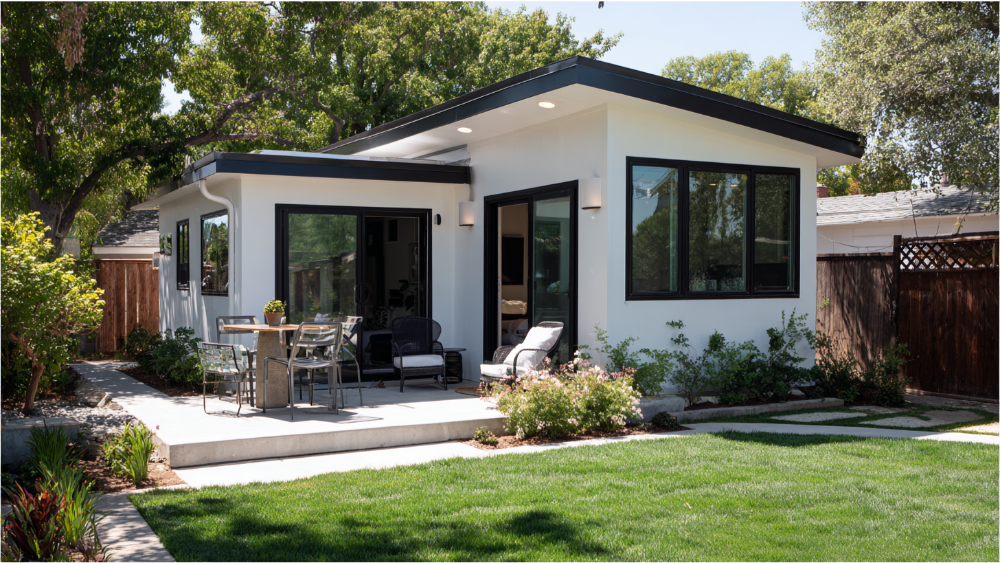
Understanding what foundation types are used for ADU construction is one of the most important early decisions in any accessory dwelling unit (ADU) project. The foundation determines structural integrity, long-term performance, permitting outcomes, and overall construction cost. Every accessory dwelling unit (ADU) in California must be designed around local soil conditions, seismic requirements, and building codes, which makes foundation selection a technical and strategic step rather than a simple construction choice.
In modern residential construction, homeowners often focus on layout and design first, but the ADU foundation ultimately determines whether the structure performs well over time. Soil conditions, uneven terrain, drainage, and load-bearing capacity all influence which foundation types are appropriate. A properly designed slab-on-grade foundation or raised foundation system ensures durability, energy efficiency, and compliance with local building codes.
Before an accessory dwelling unit (ADU) is approved, soil testing and a soil report are typically reviewed to confirm the correct foundation design. Whether the goal is to create extra living space or generate rental income, the foundation is the structural base that supports the entire building process.
Every accessory dwelling unit (ADU) must meet strict structural integrity requirements due to seismic activity in California. Foundation types are designed to resist movement, shifting soil conditions, and lateral forces. A structural engineer evaluates load-bearing capacity and ensures the ADU foundation meets safety standards.
Different soil conditions require different solutions. Slab foundations perform well on stable ground, while raised foundation systems or hybrid foundation systems are often required for uneven terrain or poor soil conditions. Reinforced foundations may also be necessary when soil composition includes clay soils or sandy soil that shifts under moisture changes.
Foundation cost is one of the most significant parts of an accessory dwelling unit (ADU) project. Foundation costs vary depending on soil conditions, excavation process requirements, and whether extensive excavation is needed.
A slab-on-grade foundation is generally the most cost-effective foundation type, while raised foundation systems and basement foundation options increase overall cost due to additional materials and labor. In many cases, foundation cost is influenced by soil testing results, grading requirements, and engineering complexity.
The permitting process for an accessory dwelling unit (ADU) is closely tied to foundation types. Local building codes require that every ADU foundation meet structural integrity standards and load-bearing capacity requirements.
A soil report is often required before approval, especially in areas with challenging soil conditions. A structural engineer may adjust the foundation design based on these findings, ensuring compliance with local building codes and improving approval timelines.
A properly designed ADU foundation ensures long-term durability. Slab foundations and concrete slab foundations reduce maintenance needs, while crawl space foundations provide easier access to plumbing and electrical systems.
Moisture control, proper insulation, and proper drainage are critical to long-term performance. Poor soil drainage or unstable soil conditions can lead to cracking, settlement, or structural movement if not properly addressed during design.
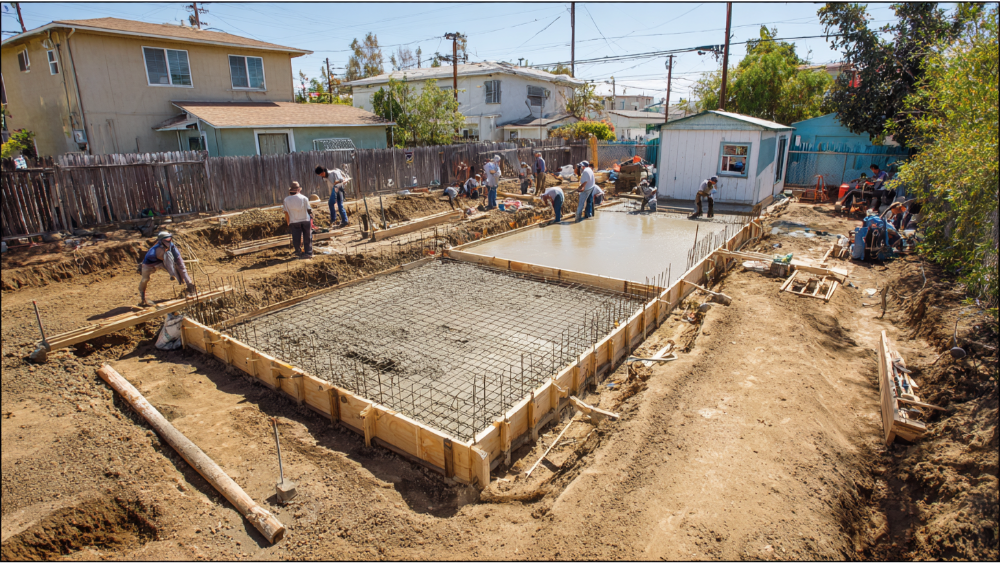
The slab-on-grade foundation is the most widely used option for accessory dwelling unit (ADU) construction in California. It involves pouring a concrete slab directly on a prepared level building pad. This method is cost-effective, efficient, and widely used for ground-level ADU projects.
Slab foundations provide a solid foundation with minimal excavation process requirements. Once construction begins, a concrete pour forms a continuous slab that supports the structure evenly. Concrete slab systems are especially effective on stable soil conditions and flat residential properties.
However, slab-on-grade foundation systems require careful soil testing. On clay soils or sites with poor soil drainage, a structural engineer may recommend reinforced foundations or hybrid foundation systems to ensure structural integrity.
A raised foundation is commonly used when soil conditions are uneven or when the site includes uneven terrain. Raised foundation systems elevate the accessory dwelling unit (ADU) above ground level using beam foundations, load-bearing footings, or concrete footings.
Raised foundations often include crawl space areas that allow access to plumbing and electrical systems. This improves long-term maintenance and can support better energy efficiency when properly insulated. Raised foundation systems are also useful in flood risk areas or locations with poor drainage.
A structural engineer may recommend raised foundation systems when slab-on-grade foundation designs are not suitable due to soil composition or slope conditions.
Stem wall systems are a hybrid foundation type that combines elements of slab and raised systems. A stem wall foundation uses concrete footings and vertical walls to support the structure and distribute loads evenly.
Stem walls improve structural integrity in moderate soil conditions and are often used when slab foundations alone are not sufficient. They are also common in accessory dwelling unit (ADU) projects that require additional stability without full basement foundation excavation.
Helical pier systems are engineered reinforced foundations used in challenging soil conditions. These systems are drilled deep into the ground to reach stable load-bearing layers.
They are especially useful for uneven terrain or sites where extensive excavation is not practical. Helical piers reduce construction time while maintaining structural integrity when properly designed by a structural engineer.
Deep pier and caisson systems are used for hillside or unstable soil conditions. These systems require deeper footings drilled into stable soil or bedrock to support the structure.
Basement foundation systems are sometimes combined with deep pier systems in steep terrain. While more expensive, they provide maximum stability for challenging soil conditions and uneven terrain where slab-on-grade foundation systems are not viable.
Clay soils expand and contract with moisture changes, which can affect slab foundations. In these areas, reinforced foundations or raised foundation systems are often recommended to maintain structural integrity.
Proper drainage is essential for every accessory dwelling unit (ADU). Poor soil drainage can lead to foundation damage over time. Crawl space foundations are often used where water control is a concern, helping maintain long-term performance.
Uneven terrain requires specialized foundation types such as raised foundation systems, beam foundations, or pier systems. These designs ensure stability when building on sloped properties or challenging soil conditions.
A soil report evaluates soil composition, load-bearing capacity, and drainage conditions. Soil testing helps determine whether slab-on-grade foundation systems are suitable or whether hybrid foundation designs are required.
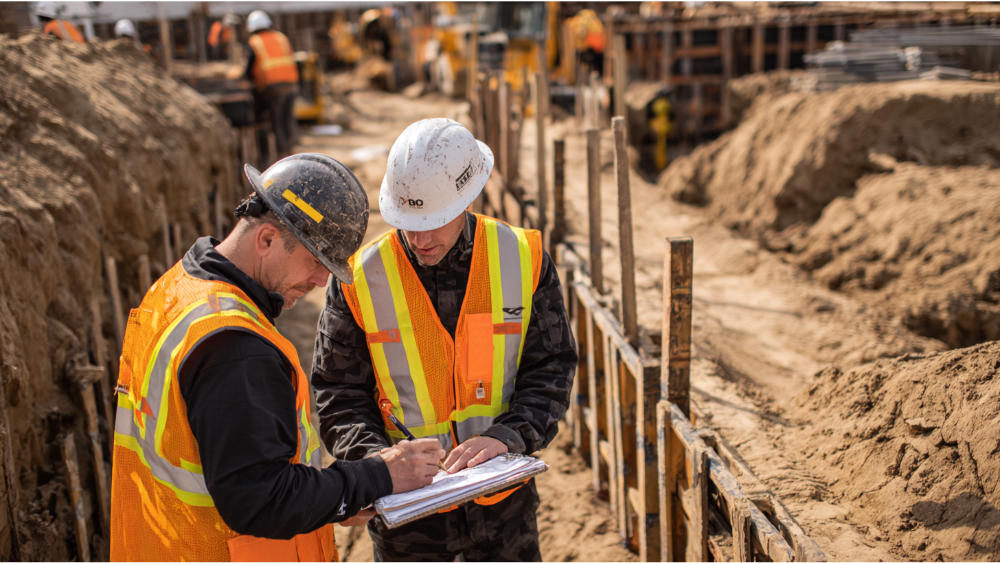
Slab-on-grade foundation systems are the most cost-effective foundation type for accessory dwelling unit (ADU) construction. They require less excavation and fewer materials, making them ideal for homeowners focused on efficiency and cost-effectiveness.
Raised foundation systems and stem walls fall into mid-range cost categories. Foundation costs vary depending on soil conditions and construction complexity. These systems are often used when slab foundations are not suitable.
Deep pier systems and basement foundation options are the most expensive due to engineering and excavation requirements. However, they are essential for challenging soil conditions and unstable terrain.
Additional costs may include soil testing, grading, drainage improvements, and engineering adjustments. These factors influence overall foundation cost and should be planned early in the project.
Site conditions such as soil conditions, uneven terrain, drainage, and slope determine which foundation types are appropriate. A level building pad may support slab-on-grade foundation systems, while uneven ground may require raised foundation systems or hybrid foundation solutions.
The purpose of the accessory dwelling unit (ADU) influences foundation selection. Whether the goal is to generate rental income or create extra living space, the foundation should support long-term performance and cost efficiency.
Local building codes influence foundation design, load-bearing requirements, and permitting approval. Compliance ensures structural integrity and smoother approval during the permitting process.
A structural engineer ensures the ADU foundation meets load-bearing capacity requirements and adapts to soil conditions. Their input is essential for safety, durability, and compliance with California standards.
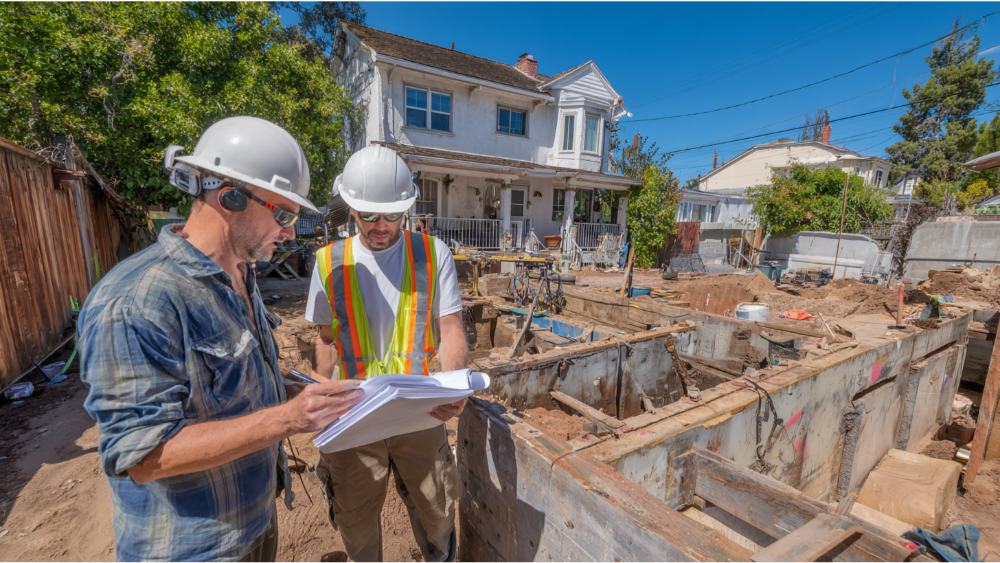
California requires reinforced foundations to ensure structural integrity during seismic events. Slab-on-grade foundation systems often include reinforcement to meet these standards.
Energy efficiency requirements affect insulation beneath slab foundations and crawl space systems. Proper insulation improves performance and reduces energy loss in accessory dwelling unit (ADU) structures.
Different cities interpret building codes differently, which affects approval timelines and foundation design requirements.
Many jurisdictions now streamline approvals for slab-on-grade foundation systems, reducing construction time and simplifying permitting for homeowners.
Focusing only on cost-effectiveness can lead to structural issues or long-term maintenance problems.
Skipping soil testing can result in incorrect foundation selection and structural movement over time.
Poor drainage can damage slab foundations and compromise structural integrity.
Plumbing and electrical systems must align with foundation design to avoid delays and added cost.
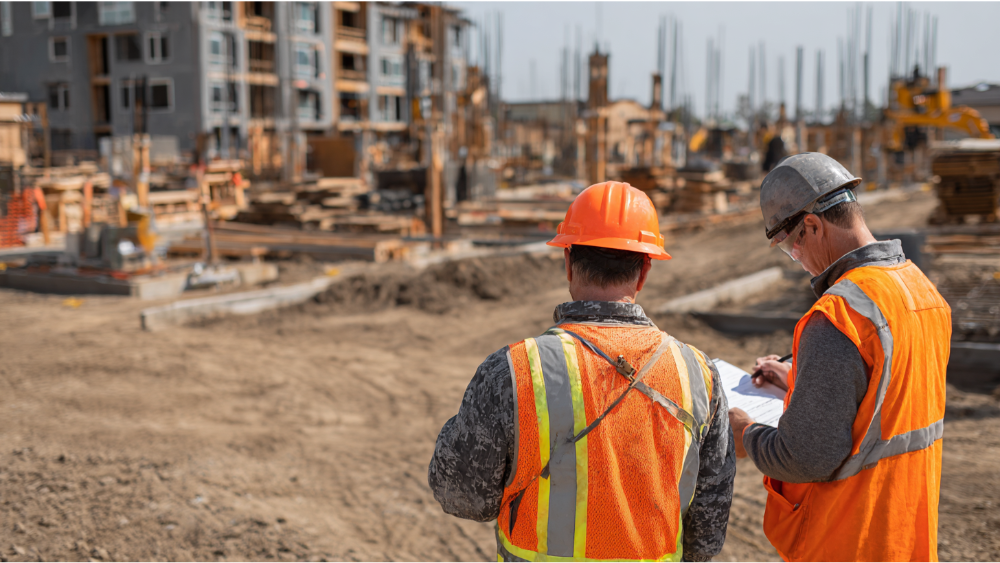
A full-service approach ensures the ADU foundation is selected correctly from the start of the accessory dwelling unit (ADU) process. Integrated planning improves structural integrity, reduces permitting delays, and ensures cost efficiency throughout construction. When foundation design is coordinated early with soil conditions, site conditions, and building codes, homeowners avoid costly redesigns and construction setbacks.
The most common foundation types for ADUs include slab-on-grade foundations, raised foundations (such as crawl space or pier and beam systems), stem wall foundations, and in some cases, basement foundations. The choice depends on site conditions, soil type, and budget.
Generally, existing foundations or concrete pads cannot be reused for an ADU because they often do not meet current structural, geotechnical, or code requirements. Starting fresh with a new foundation engineered for the specific ADU and site conditions is usually more cost-effective and compliant.
Soil conditions like expansive clay, poor drainage, or unstable soil require specialized foundation designs such as reinforced concrete foundations, raised foundations, or deepened footings to maintain structural integrity and prevent settlement or cracking.
ADU foundation cost is influenced by soil conditions, site grading, foundation type, square footage of the ADU, engineering requirements, and the complexity of the construction process. Challenging sites often increase costs due to additional excavation or specialized foundation systems.
The foundation phase usually takes between one and three weeks, depending on site preparation, soil conditions, inspection scheduling, and weather. Complex foundation types or challenging sites may extend this timeline.
A structural warranty, typically lasting up to 10 years, provides homeowners protection against defects in major structural components like the foundation and framing. It ensures long-term stability and peace of mind by covering repairs related to workmanship or material failures.
Selecting the right foundation type is a critical step in the successful construction of an accessory dwelling unit (ADU). It impacts structural safety, compliance with California’s seismic and building codes, overall project cost, and long-term durability. Whether opting for a slab-on-grade foundation, a raised foundation, or more specialized engineered systems, the decision must be guided by thorough soil testing, site evaluation, and expert input from structural engineers. Understanding the nuances of foundation types and their associated costs helps homeowners plan effectively and avoid costly issues down the road. Working with experienced contractors and ensuring a comprehensive structural warranty further safeguards the investment, ensuring your ADU stands strong and functional for decades to come.