
Key Takeaway
To choose the right ADU builder in California, verify their CSLB license, confirm they specialize in ADUs, and ensure one partner owns design, engineering, permitting, and construction end to end. California ADU permits grew to over 30,000 in 2024, making builder selection more competitive and consequential than ever. Ask about what is included in writing, how change orders work, and who carries the project all the way to certificate of occupancy.
The right ADU builder in California is licensed, ADU-specialized, transparent about scope and exclusions, and accountable for the full path from design and permitting through construction and certificate of occupancy. Before you sign, ask who owns each phase, what’s included in writing, how payments and change orders work, and how they’ll handle the California permitting process. If you’re a homeowner comparing proposals or getting close to signing a six-figure agreement, you’re right to be cautious. Below is a question-by-question framework to help you sort a complete plan from a low bid, and to find an ADU contractor who will stand behind the outcome. An Accessory Dwelling Unit (ADU) touches design, engineering, local regulations, utilities, and inspections, so specialized knowledge matters at every step of the ADU project.
Why Choosing an ADU Builder for Your ADU Construction Is Different

An ADU is a complete independent living unit on the same lot as your primary home, with its own kitchen, bathroom, and sleeping space. That’s a different animal than a backyard shed or a bump-out addition. It’s also a major investment, and more California homeowners are making it. According to the California Department of Housing and Community Development (HCD), annual ADU permits grew from 1,336 in 2016 to 30,354 in 2024, when ADUs accounted for more than 26.6% of all homes permitted statewide. Those are the latest figures in HCD’s ADU Handbook, updated in March 2026, which is the current legal reference for California ADU law.
State law is genuinely favorable to ADUs. But favorable law doesn’t erase the work: ADU design, structural and civil engineering, local plan review, utility connections, energy-code compliance, and inspections all still happen. California municipalities enforce building standards differently, and each jurisdiction has its own permitting requirements and timelines. That variation is exactly why the ADU builder you choose matters. Because ADUs differ so much from typical construction projects and even from custom homes, the questions that follow are designed to reveal one thing above all: who takes responsibility for the entire ADU construction outcome, not just the framing and drywall.
Start With License, Insurance, and Legal Basics
Ask directly: Are you licensed to build ADUs in California? What license classification applies to my ADU project? Can I verify your license, bond, insurance, and workers compensation? And if a salesperson is involved, are they registered as a Home Improvement Salesperson?
Here’s why this isn’t optional. Under Contractors State License Board (CSLB) rules, anyone who contracts for work that requires a building permit, uses employee labor, or is valued at $1,000 or more must hold a current, valid CSLB license. ADU projects require permits and involve multiple trades, so license verification is non-negotiable. For ADU work, a B – General Building Contractor can manage projects involving two or more unrelated trades, and a C-47 General Manufactured Housing Contractor may install an ADU that is a manufactured home built off site.
Don’t stop at a license number on a business card. Verify the status yourself at CSLB.ca.gov, and ask to see the builder’s pocket license and photo ID. Understand what “bonded” actually means: California licensed contractors carry a $25,000 license bond, but CSLB warns that amount may not cover a six-figure project or multiple complaints. Workers compensation insurance is required if the ADU company has employees, so ask to see the certificate. General liability insurance isn’t required by CSLB, but general liability covers property damage, so if a builder doesn’t carry it, ask how any damage would be covered.
What a strong answer sounds like: a clear license number you can verify, a straight explanation of classification, and no hesitation about sharing proof of general liability insurance and workers compensation. Golden State ADUs, for example, is licensed and bonded (LIS. #1125656), and we expect homeowners to confirm every credential before they commit.
Ask Whether They Are Truly ADU Specialists Building ADUs
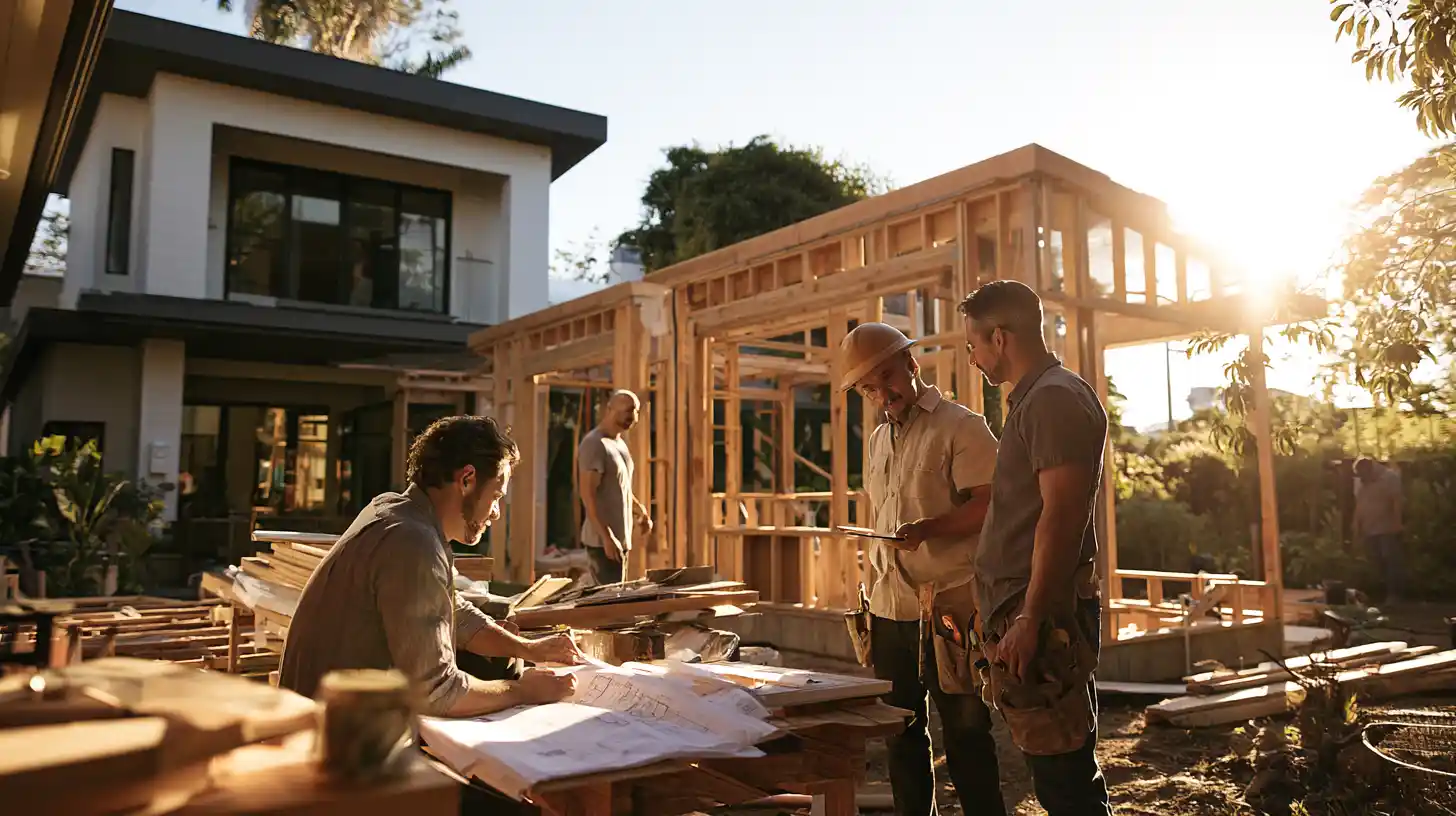
Ask: How many ADUs have you designed, permitted, and built recently? Can I see past projects similar to mine? Can I speak with references and past clients? What ADU types do you build, from detached units and garage conversions to attached ADUs, JADUs, and retirement ADUs?
Many general contractors who build kitchens, decks, and the occasional addition may not have deep ADU-specific experience, and that gap tends to show up as project delays and cost overruns. ADU rules, plan-check corrections, and setback and size standards have their own logic. Local and jurisdictional experience helps a specialist move through the permitting process without avoidable surprises, because they’ve already seen how a given department reviews these applications. An experienced ADU builder with a proven track record and experience specifically in this work is far more likely to keep your job on course.
At Golden State ADUs, ADUs are all we do. We build detached and custom ADUs, tiny homes, studios through three-bedroom layouts, ADUs with a garage, and retirement ADUs for multigenerational households. A detached ADU, for example, follows different energy and site rules than an attached unit, so that distinction alone rewards specialized experience. That focus is the point of the question. An ADU company that works on these units occasionally is not the same as one that lives in this work every day, which is what separates the best ADU companies from generalists.
What a strong answer sounds like: specific project references, photos of finished ADUs and completed work on similar projects, and a builder who can talk fluently about the type of unit you want on a lot like yours.
Who Owns ADU Design, Engineering, Permitting, and Construction?
This is the question that separates a complete partner from a coordinator of loose parts. Ask: Is design handled in-house or handed off? Who prepares construction documents? Who handles structural and civil engineering? Who submits permits and responds to plan-check corrections? Who coordinates utilities, inspections, and closeout?
When those roles are split across a separate designer, engineer, permit consultant, and builder, you inherit the coordination between different contractors. If the plans don’t match the engineering, or the city kicks back corrections, everyone can point at everyone else while your ADU project sits. Complications in the permitting process alone can add weeks and cost, and fragmented handoffs make them worse. One partner who owns the whole path removes that risk. You have a single point of accountability from concept to completion, with project management that stays consistent from the first drawing to final inspection, which usually means fewer delays.
Golden State ADUs is a full-service design-build company. Our ADU design, structural engineering, and civil engineering come from our in-house arm, Golden State Design & Engineering, so we’re a true one-stop shop rather than a general contractor who subcontracts the design and hopes it lines up. When one ADU company handles the entire process, the ADU building process stays coherent. When we say permits, paperwork, compliance, done for you, we mean we submit the application, respond to corrections, and carry the entire permit process through, so you’re not chasing four vendors.
What should make you pause: a builder who treats permitting as “your problem,” or who can’t clearly say who prepares your construction documents. If nobody owns the whole path, the gaps become yours.
How Do They Evaluate Feasibility Before Quoting?
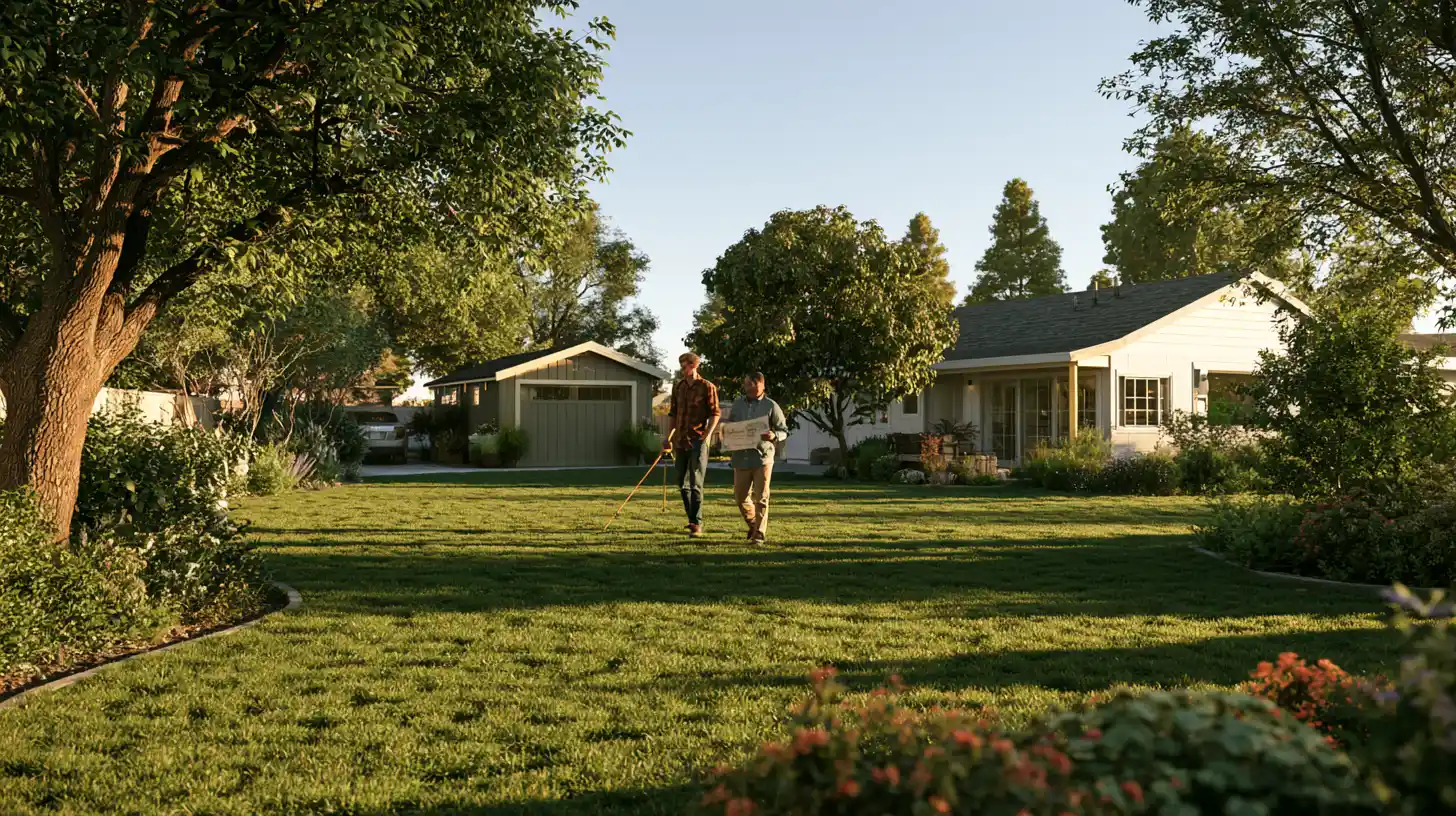
Ask: Will you review my lot, access, setbacks, utilities, slope, trees, drainage, and existing structures? What could make my site more complex? What assumptions are baked into the estimate? What happens if my property can’t support the accessory dwelling unit I want?
A complete ADU application has to meet local zoning and local building codes, and your site conditions drive both the design and the price. Feasibility shapes site preparation scope and estimate accuracy, so a builder who quotes without looking at your property is guessing. The good news for cautious homeowners: don’t disqualify yourself before you talk to anyone. A strong ADU builder will review satellite photos, walk your lot, and give you honest feedback early so you can make an informed decision. We’d rather tell you your yard won’t work than sell you an ADU project that shouldn’t be built. Every Golden State ADUs project starts with a one-hour initial walkthrough for exactly this reason.
What a strong answer sounds like: a builder who asks about access and utilities before quoting, names the specific things that could complicate your site preparation, and states the assumptions their estimate depends on.
What’s Included, and What’s Excluded?
Ask: Does the proposal include design, engineering, permitting coordination, permit fees, utility upgrades, solar and Title 24 compliance, site work, finish selections, appliances, landscaping, and final cleanup? What allowances are included? What’s specifically excluded? Which numbers are estimates, and which are contract amounts?
This is usually why two ADU quotes look wildly different. The lower bid often omits scope. Vague estimates lead to surprise costs later, and hidden costs and budget overruns can add $30,000 to $60,000 to a project when work that was always necessary shows up as a “surprise.” The lowest bid rarely represents the best value once you account for omitted work. A reliable ADU contractor gives you an itemized breakdown that separates design, permits, and finishes, so you can compare proposals on the same footing and make an informed decision. Since an ADU is a significant investment, this clarity is worth insisting on.
Energy code is a common blind spot worth calling out here. Newly constructed detached ADUs generally must meet Energy Code requirements for a new single-family building and typically require solar PV, while attached ADUs are treated as additions and aren’t required to add solar. That’s a real line item, so ask where it lands in the estimate.
We don’t publish a fixed price, because the cost of each ADU varies with site conditions, materials, and finishes. What we do commit to is fair and transparent pricing, an honest scope, and value engineering to get you the most out of your budget.
What a strong answer sounds like: a single, clear document listing what’s in and what’s out, with estimates and contract amounts labeled as such.
Ask About the ADU Construction Contract, Payment Schedule, and Change Orders

Ask: Is every promise in your ADU construction contract in writing? What is the payment schedule? Are progress payments tied to work completed or materials delivered? How are change orders approved? What happens if hidden conditions appear once ADU construction begins?
California law gives you protection here, so use it. A written contract is required for home improvement work over $500. The down payment cannot exceed 10% of the contract price or $1,000, whichever is less, and CSLB notes there’s no exception for special-order materials. Progress payments should not exceed the value of work performed or materials delivered, so don’t pay ahead, document every payment, and get receipts. A solid contract should include a detailed payment schedule, a description of the work and materials, who obtains permits, a completion date, the license number, and a written change-order process where scope or price changes are signed before the construction work happens.
CSLB recommends getting at least three written bids from potential contractors and comparing them against identical plans and scope, and warns against automatically taking the lowest one, since a substantially lower bid often signals missing scope or future disputes. A good contractor welcomes this comparison. You also have cancellation rights after signing: three days generally, five if you’re 65 or older, and seven in a declared disaster zone.
What should make you pause: a request for a large upfront deposit, or verbal promises that never make it into the contract.
What Does California Law’s ADU Permitting Timeline Really Mean?
Ask: What does California law’s 60-day ADU review rule mean in practice? What happens if the city issues plan-check corrections? Who handles resubmittals? What timeline should I expect across design, permits, construction, inspections, and certificate of occupancy?
HCD sets clear rules. For a lot with an existing single-family or multifamily dwelling, the agency must determine whether your application is complete within 15 business days, and must approve or deny a completed application within 60 days. ADUs are reviewed ministerially, without a discretionary hearing, and the objective standards should be knowable before you apply.
Here’s the catch: the 60-day window is not your whole project timeline. Design, engineering, an incomplete application, corrections, utility coordination, and inspections all add time. Without careful planning, the permitting process alone can run four to six months. Because local jurisdictions each review differently, confirm the ADU builder actually knows your local process and your local regulations. Knowing how a department handles plan check work makes a real difference in whether your application moves. As a company-specific example, Golden State ADUs projects typically run 3 to 5 months for permit plans and design and 3 to 4 months for construction, depending on size. That’s a typical range, not a guarantee.
What a strong answer sounds like: a builder who explains completeness review, plan check, and construction as separate phases, and who owns the resubmittals when corrections come back.
Ask About Utilities, Title 24, Solar, and Inspections
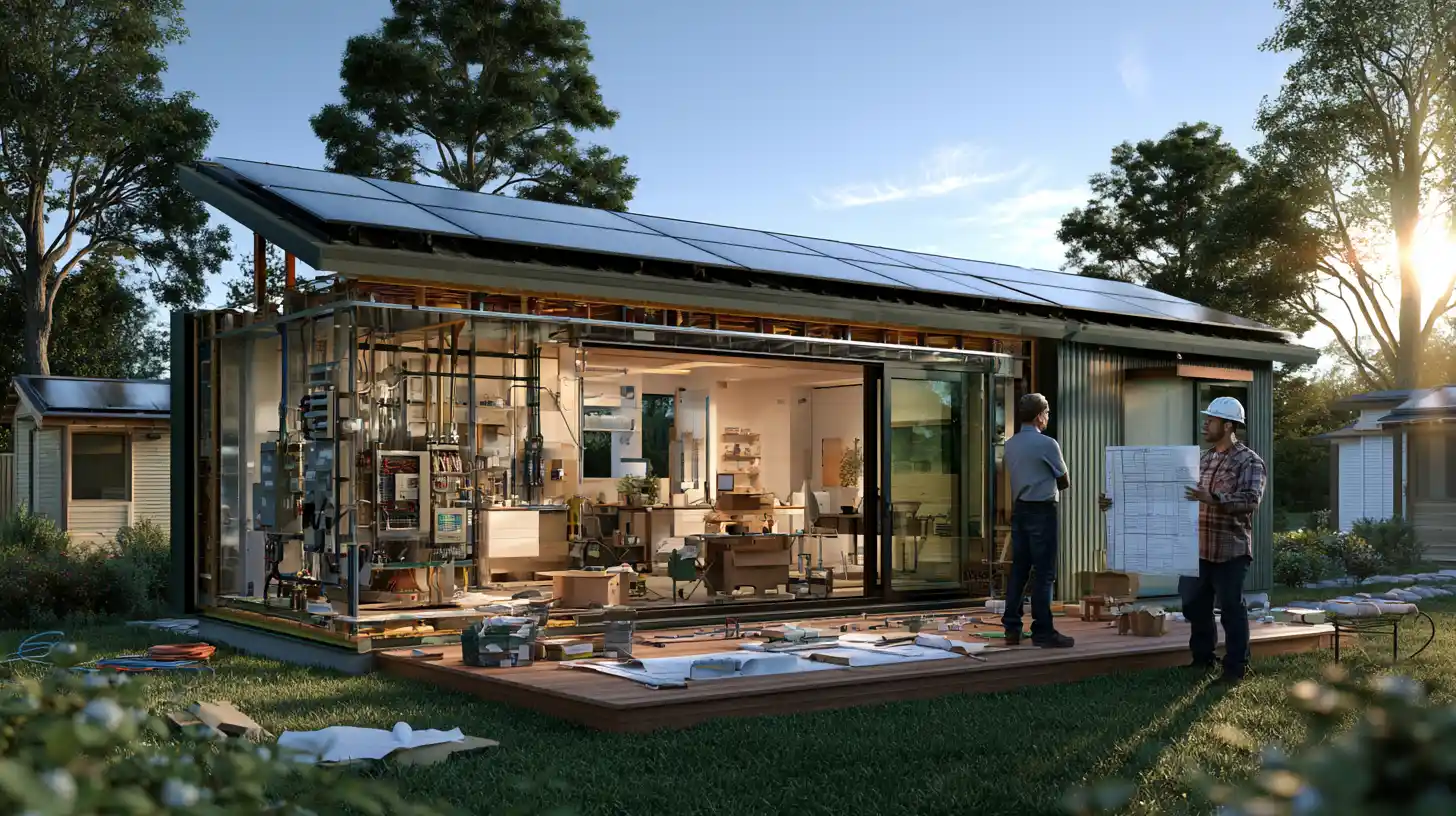
Ask: How will you handle utility connections, panel upgrades, trenching, Title 24 energy compliance, solar where required, and the inspection sequence through final occupancy? These items sit in the middle of the project, and they’re where a builder’s technical depth either shows up or falls short. A vague answer here often means those costs will resurface as change orders. You want an ADU contractor who can walk you through electrical capacity, what the energy code requires for your ADU type, and who schedules and clears inspections on your behalf as part of steady project management, so the construction process stays on track and the work is completed efficiently to industry standards.
Communication, Quality, Warranty, and Closeout
Ask who your main point of contact and project manager is, how often you’ll get updates, how decisions are documented, who manages the job site, and how you’ll know when inspections happen. It’s worth taking time to evaluate communication and understand a builder’s communication style before you sign, because steady updates make all the difference across the entire process. Then ask about the finish line: What warranty is provided? Is there a punch-list process? Who answers questions after the project ends? How do we get to final inspection and the certificate of occupancy? Remember that you must obtain a certificate of occupancy before anyone can live in the accessory dwelling unit (ADU), so getting to that document, not just approved plans, is the real goal.
Responsiveness is a pillar of how we work. We respond quickly to calls and emails and provide regular project updates without delays, and our reviews consistently reflect that. Every Golden State ADUs project includes a 10-year structural integrity warranty and a 1-year fit-and-finish warranty, with post-project support through construction administration.
Why the Right ADU Company Protects Your Property Value
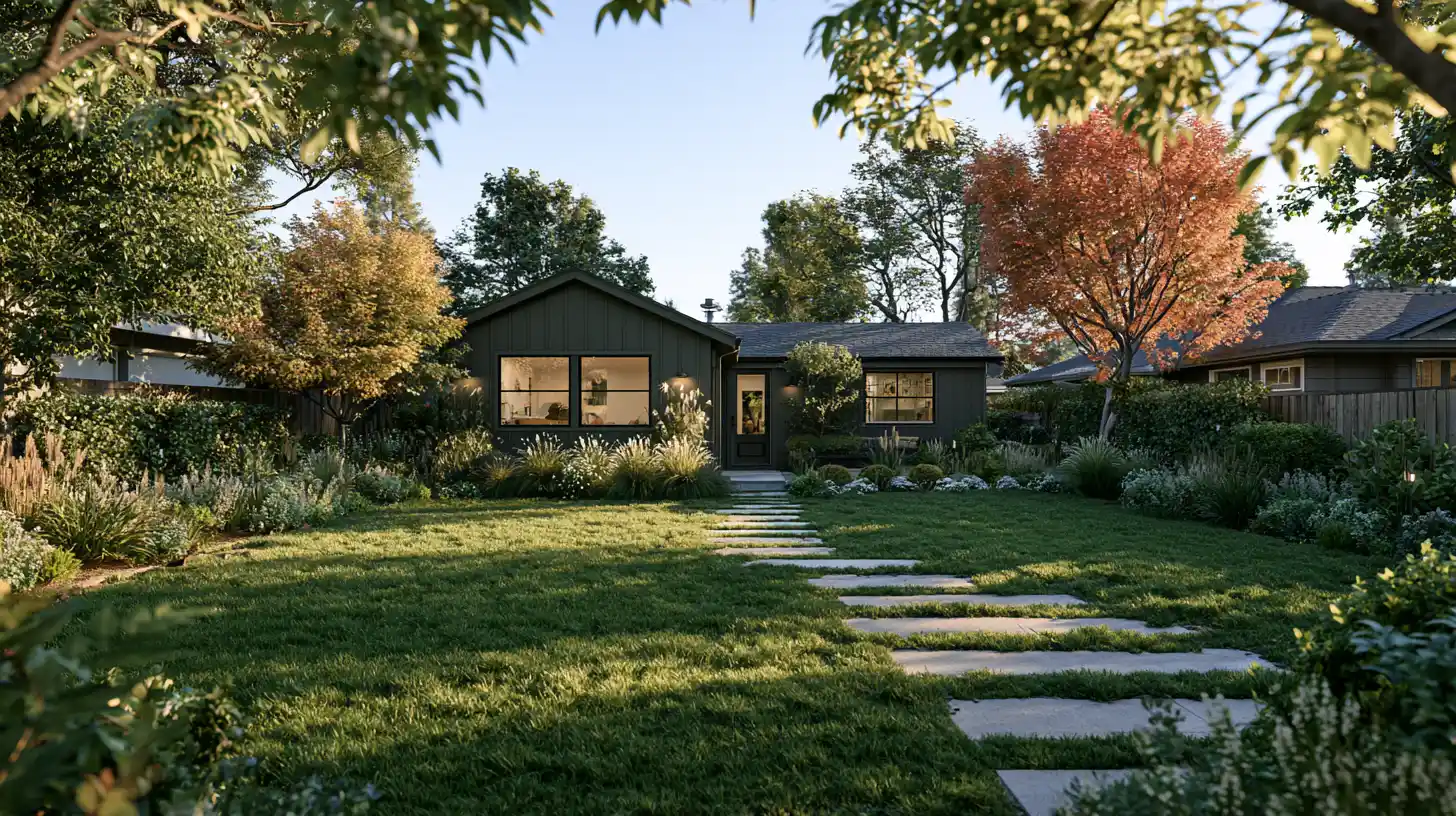
An ADU is more than a building. Done well, it can raise your property value, open the door to rental income from a new rental unit, or give aging family members a comfortable place close to home near the main house. That’s why quality craftsmanship and thoughtful design belong at the center of your decision, not just the bottom-line price. For any major investment like this, potential challenges such as weather delays are easier to absorb when your builder plans for them. A poorly built unit or a stalled permitting process can erode the very property value and ability to generate rental income you were hoping to unlock. Choosing the right ADU company either protects that upside or puts it at risk, which is one more reason the questions above deserve real answers before you sign.
Red Flags Before You Sign
- No verifiable CSLB license status you can confirm online
- Pressure to pay a large upfront deposit
- A vague estimate with missing or unclear scope
- Verbal promises that never make it into the contract
- No clear permit strategy, or the permitting process described as “your problem”
- No written change-order process
- Can’t explain utilities, Title 24, solar, or the inspection sequence
- No ADU-specific references or comparable past projects
- No proof of insurance or workers compensation coverage
- A lowest bid with exclusions you can’t pin down
The Pre-Signature Checklist
- License verified at CSLB.ca.gov
- Insurance and workers compensation reviewed
- Scope written and itemized
- Exclusions written
- Payment schedule written and tied to work completed
- Change-order process written
- Permit responsibility clearly assigned
- Timeline realistic and phase by phase
- Communication and project management plan clear, with a way to track progress
- Warranty documented
- References and past projects reviewed
Get Clarity Before You Commit
The best way to answer these questions for your own property is to sit down with a specialist who can look at your lot and your goals. Every Golden State ADUs project starts with a one-hour initial walkthrough, where you’ll get real feasibility insight, a transparent view of budget, and a concept-to-completion plan under one roof, so you can make an informed decision about your ADU journey. We’re a Sacramento-based, full-service design-build ADU company serving homeowners throughout California, trusted by more than 100 happy customers. Call (916) 909-2387, email office@gsadus.com, or book a consultation to get clarity before you sign anything.