
Key Takeaway
SB 1211 is a California law, effective January 1, 2025, that allows owners of multifamily properties to build up to 8 detached ADUs on a single lot, capped by the number of existing units. A duplex qualifies for up to 2, an 8-unit building for up to 8. ADUs under 750 square feet are exempt from local impact fees, and qualifying projects receive ministerial approval without a public hearing.
SB 1211 Explained: More Homes on California Multifamily Properties
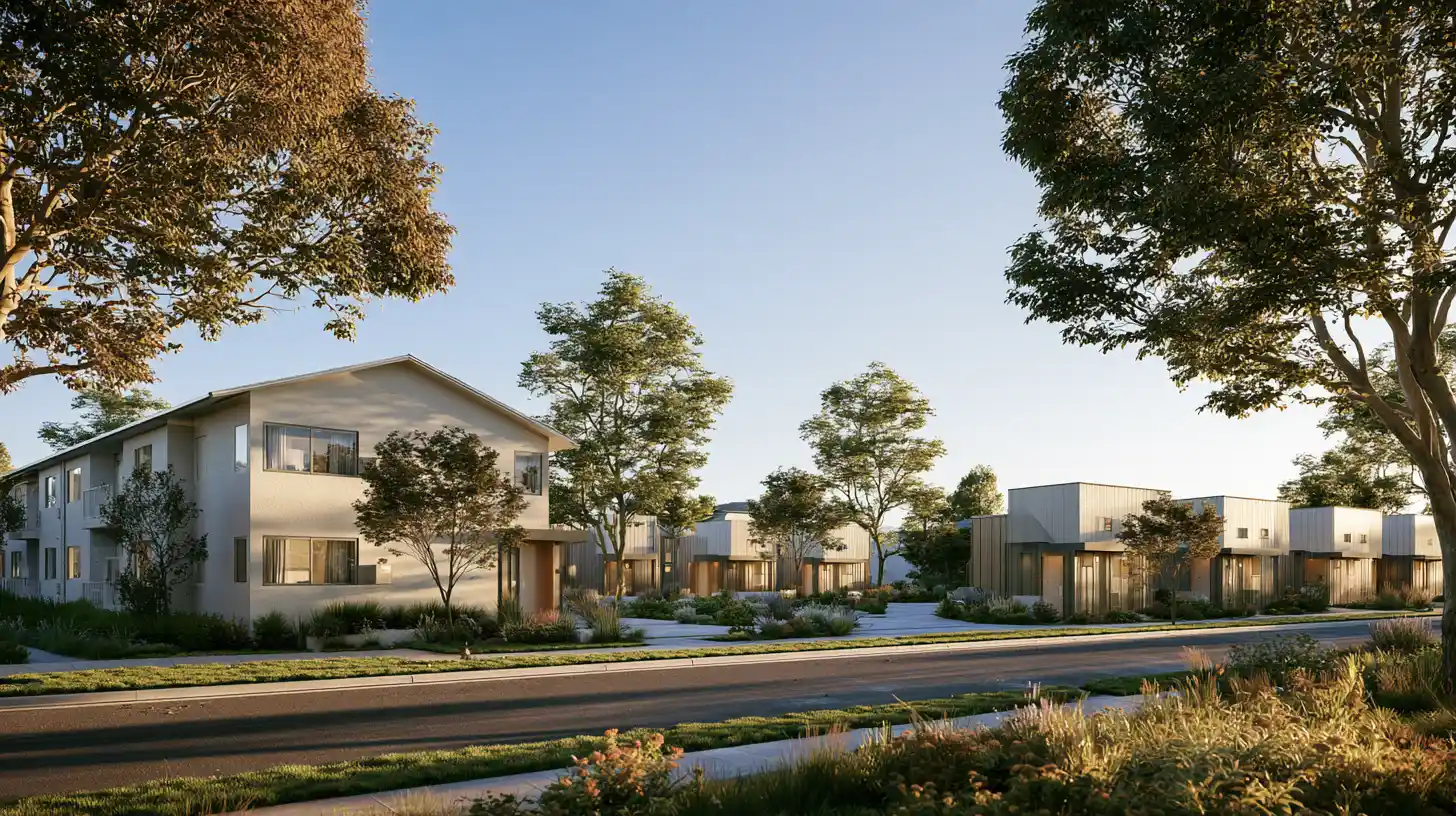
SB 1211 is a California law, effective January 1, 2025, that lets owners of lots with an existing multifamily dwelling add up to 8 detached Accessory Dwelling Units (ADUs), capped by the number of existing units on the lot. It moved through the Legislature and passed the senate floor before it was signed on September 19, 2024, and it’s built for California duplex, triplex, fourplex, and apartment owners weighing whether their property can hold more homes. Written to ease the state’s housing shortage, it gives multifamily property owners a wider path to add rental income on land they already hold. If that’s you, this article gives you the real rules, plus an honest look at how to tell what your specific site can actually support. This applies to California properties only, so if you own a multifamily lot here, you now have a wider path to build.
Quick Eligibility Snapshot: Does Your Property Qualify?
Run this fast self-check before you go further:
- Does the lot have an existing multifamily dwelling (two or more attached existing units)?
- Are those units attached to each other, not separate detached houses?
- Is the property in a residential or mixed use zone?
- Is there open land for detached ADUs, or non-livable space you could convert?
If you answered yes to most of these, you’re likely in range. Real eligibility comes down to a site review that measures your lot against building and safety codes, and against the local ordinance your city applies to accessory dwelling units.
What Counts as a Multifamily Dwelling Under California ADU Law?
Under existing law governing ADUs, a multifamily dwelling is a structure with two or more attached dwelling units on a single lot. Duplexes, triplexes, fourplexes, and apartment buildings all qualify. Here’s the catch that trips people up: multiple single family homes sitting on one lot do not count as multifamily for this pathway. The units have to share walls. If your property is a cluster of standalone houses, you’re on a different track, and it’s worth confirming that early.
What Changed Under SB 1211?
Existing law before SB 1211 generally capped detached ADUs on multifamily properties at 2. That was the ceiling regardless of how large the land was. Current law now raises that cap to up to 8 detached accessory dwelling units on lots with an existing multifamily dwelling, as long as the number of detached ADUs doesn’t exceed the count of existing units on the lot.
The law did two other useful things. It expanded the parking rule so local governments can’t force replacement of uncovered off-street parking removed for ADU construction. And it limited the extra standards local agencies can impose on qualifying units. SB 1211 amended Government Code sections 66313, 66314, and 66323, refining what local agencies may require and what they must ministerially approve. It sits alongside other tools like density bonuses that the state uses to answer the housing crisis.
How Many Accessory Dwelling Units (ADUs) Can You Build on a Multifamily Lot?
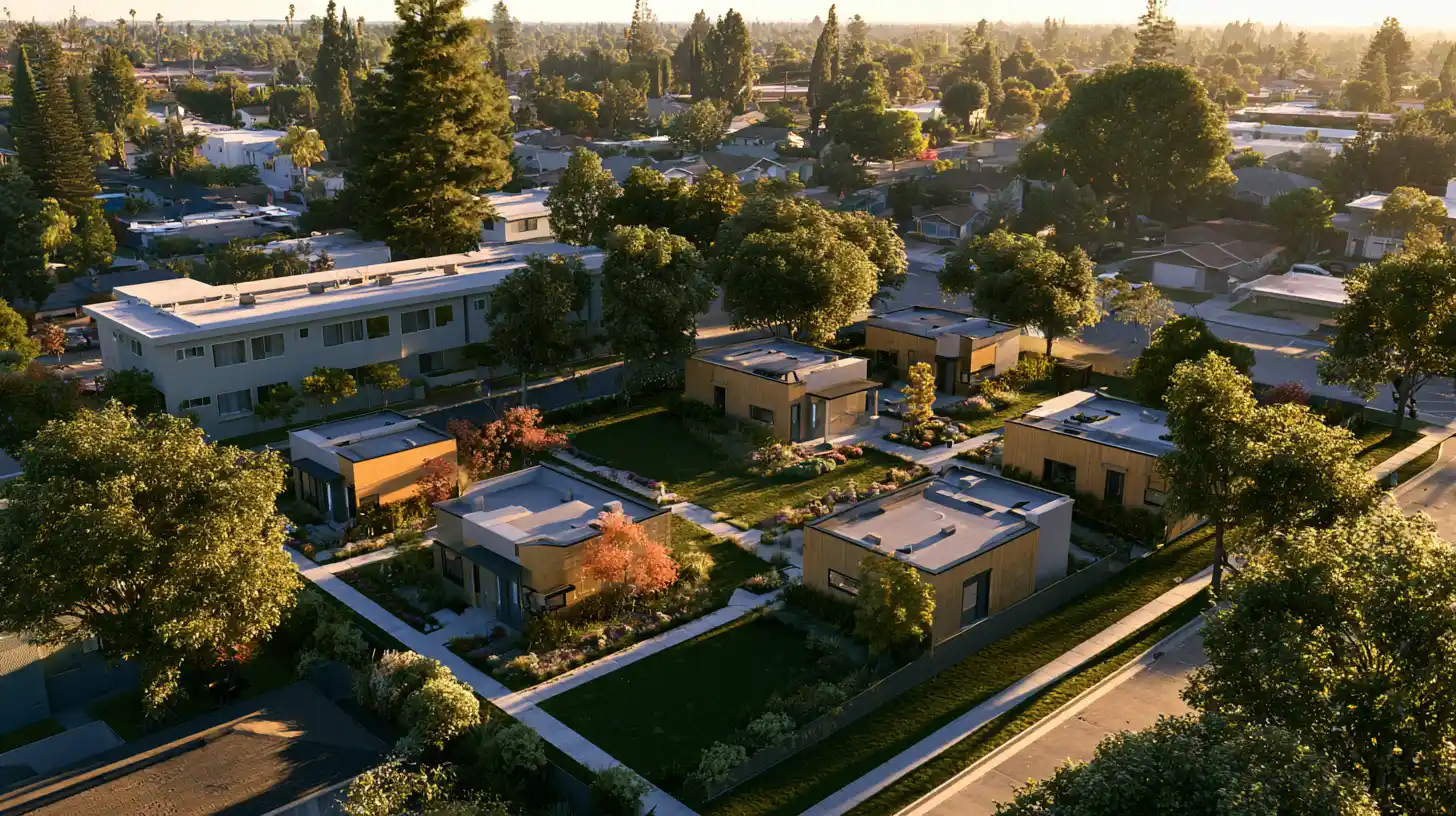
Two allowances stack here: detached ADUs and conversion ADUs. Local agencies must permit at least 1 conversion ADU inside existing structures that hold non-livable space, and up to 25% of the existing unit count. This means multiple ADUs can land on a single lot.
| Property | Detached ADUs | Conversion ADUs |
|---|---|---|
| Duplex | Up to 2 | At least 1 (if qualifying space exists) |
| Triplex | Up to 3 | At least 1 |
| Fourplex | Up to 4 | 1 (25% of 4) |
| 8-unit building | Up to 8 | Up to 2 (25% of 8) |
| 20-unit building | Up to 8 | Up to 5 (25% of 20) |
Read the fine print: “up to 8” is a ceiling, not a promise. A duplex means up to 2 detached ADUs, not 8, because detached units can’t exceed your existing unit count. Physical feasibility and code compliance still decide the real number of ADUs that gets built.
Existing Units vs. Proposed Multifamily Dwelling: Why It Matters
This distinction changes your numbers completely. A lot with an existing multifamily dwelling can qualify for up to 8 detached ADUs. A lot with a proposed multifamily dwelling, one you haven’t built yet, is limited to up to two detached ADUs. If you’re buying a property specifically to add housing, this matters. Purchasing a lot where the multifamily building already stands puts you in the up-to-8 category. Planning to build the primary units from scratch keeps you at 2.
Detached ADUs vs. Conversion ADUs (and How They Combine)
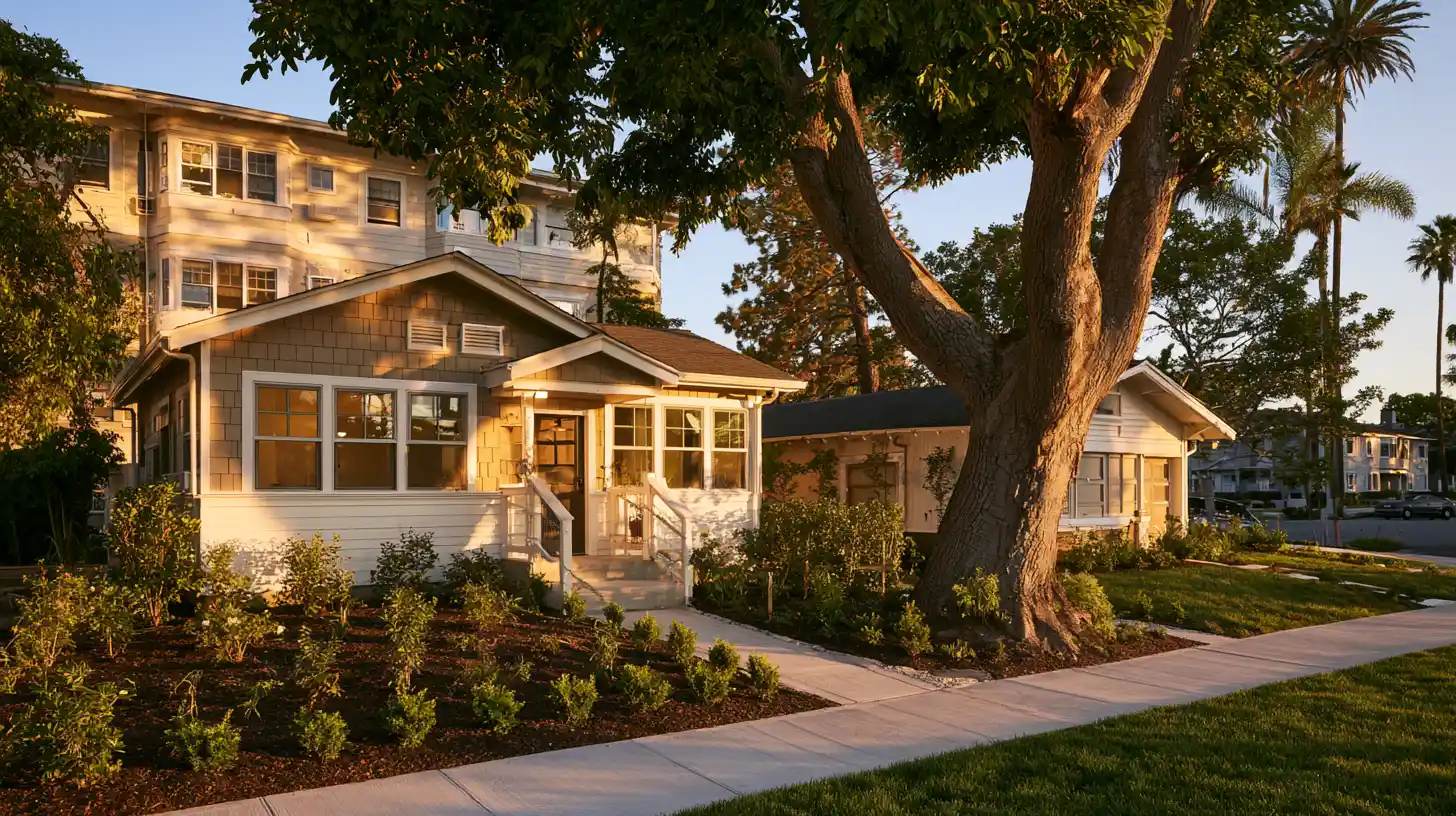
Detached ADUs are new construction, separate structures placed in the open space of your lot. Conversion ADUs, sometimes called interior ADUs, come from areas that aren’t livable space today: storage rooms, a garage, basements, passageways, boiler rooms, or a leasing office that gets converted into a unit. Livable space means a dwelling intended for human habitation such as living, sleeping, eating, cooking, or sanitation. Non-livable areas are what you can convert.
These two paths can potentially work in conjunction on the same lot. You might build two detached ADUs in the yard and convert an old storage area at the same time. Whether both work together depends on site feasibility, building code, utilities, and fire access.
Can My City Stop It? Ministerial Approval and Local Limits
Qualifying ADUs under Government Code section 66323 get ministerial approval. That means local agencies approve or deny without discretionary review or a public hearing when the project meets various requirements. There’s no design board deciding whether they like your project. Existing law imposes this ministerial standard specifically to keep qualifying units moving.
The timeline is set too. A permitting agency has 15 business days to determine whether your building permit application is complete and notify you in writing. For a lot with an existing dwelling, the agency must ministerially approve or deny a completed application within 60 days. Local agencies also can’t tack on standards that section 66323 doesn’t authorize, beyond a short list of specified variations, including parking, a height limitation, setbacks, lot size, floor area ratio, or open space rules.
Ministerial doesn’t mean the plans skip real work. Your project is still subject to building, health, safety, utility, and site requirements before local agencies will ministerially approve it. The approval is streamlined, not automatic.
Do You Have to Replace Parking Under SB 1211?
No. A local agency cannot require replacement of offstreet parking spaces when a garage, carport, covered parking structure, or uncovered parking space is demolished or converted in connection with ADU construction. SB 1211 added uncovered spaces to that rule, which is a meaningful change for lots where surface parking is the obvious spot for a new unit. Whether the space is a covered parking structure or an uncovered parking space, existing law now protects that ground for building, and requiring replacement parking is off the table for qualifying projects.
One caveat worth being clear about: this covers local requirements about requiring replacement of parking only. It doesn’t resolve tenant rights, lease terms, rent-control obligations, or HOA rules. For anything touching your tenants or CC&Rs, check your local requirements and consult qualified professionals.
Site Feasibility Checklist: What to Evaluate Before You Build
The law tells you what’s allowed. Your site tells you what’s buildable. Before committing to plans, evaluate:
- Realistic unit count for your lot size and existing unit total
- Lot layout and available open land for detached units
- Fire access and emergency vehicle circulation
- Setbacks, including a rear yard and side up to 4 feet for qualifying detached ADUs
- Height limits (16, 18, or 20 feet depending on conditions)
- Utility capacity and connection points
- Drainage and stormwater handling
- Existing easements on the property
- Whether a covered parking structure or uncovered parking space can be demolished or converted for a unit
- Tenant access and construction staging
- Building-code upgrades to existing multifamily dwelling structures on site
- Value engineering to keep the project practical
Why Design-Build and Community Development Make SB 1211 Work for You
ADUs are all we do at Golden State ADUs. We’re a Sacramento-based, full-service design-build ADU specialist serving property owners throughout California. Our in-house design and engineering, through our partner Golden State Design & Engineering, means one team handles feasibility, design, permitting, and construction from concept to completion. You’re not coordinating a separate architect, engineer, and builder and hoping they talk to each other. We know how local agencies and community development departments read these applications, and we prepare plans that meet their standards the first time.
That matters most with a law like this, where the maximum unit count on paper rarely matches what a site actually supports. We start with feasibility, price the work with fair and transparent numbers, handle the building permit and permitting process for you, and back the build with a 10-year structural integrity warranty. You get a realistic answer before you spend on plans.
Find Out What Your Property Can Actually Support
Before you invest in drawings, get clarity on your real unit potential. Our free 1-hour project walkthrough gives you an honest read on what SB 1211 lets you build on your specific lot. No pressure, just expertise you can use. Visit our website, call (916) 909-2387, or book a consultation to get started.
Frequently Asked Questions
What is the new law for ADUs in California?
SB 1211, effective January 1, 2025, lets owners of lots with an existing multifamily dwelling create up to 8 detached ADUs, capped by the number of existing units on the lot.
Does SB 1211 let every multifamily property build 8 ADUs?
No. It’s up to 8, and detached ADUs can’t exceed your existing unit count. A duplex means up to 2 detached ADUs, not 8.
Can the ADUs be used as short-term rentals?
No. ADUs created under Government Code section 66323 must be rented for terms longer than 30 days, so this isn’t a short-term rental strategy.
How long does ADU permitting take under California law?
A city has 15 business days to determine your application is complete, then 60 days to approve or deny a completed building permit application on a lot with an existing dwelling.
Do ADU impact fees apply?
ADUs with 750 square feet of interior livable space or less are exempt from local impact fees. Larger ADUs are charged proportionately to the primary dwelling’s size, so restrictions still apply based on scale.