
Key Takeaway
An off grid tiny home in California is legal only when it qualifies as a permitted dwelling such as an ADU, manufactured home, or code-compliant site-built house. Off grid describes how a home gets its utilities, not a way to skip building codes. California ADU permits reached 30,354 in 2024, and the ADU path is the most homeowner-friendly route to small, independent living with approved solar, water, and wastewater systems.
Can You Build an Off-Grid Tiny Home in California? The Short Answer
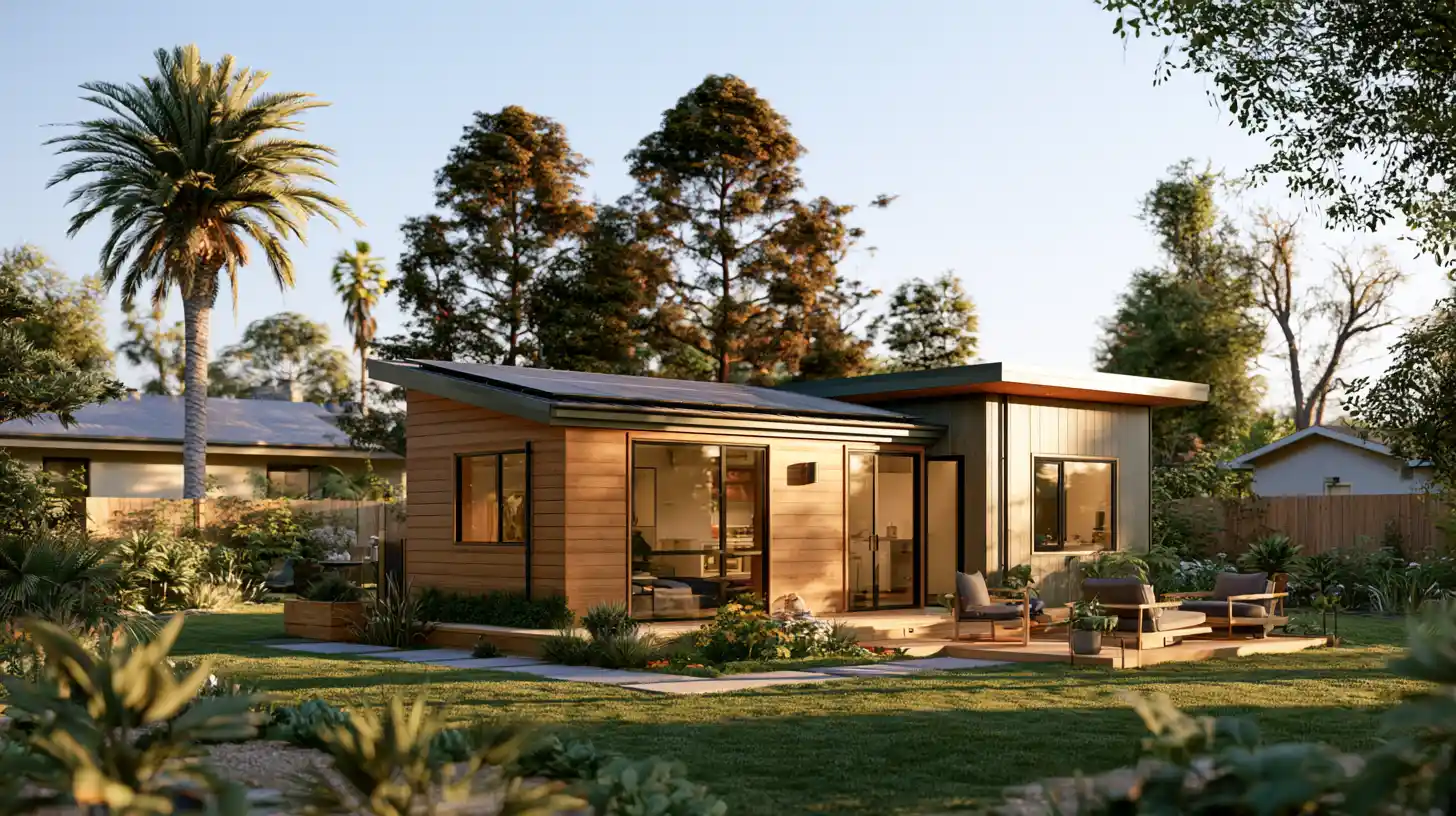
Yes, you can build an off grid tiny home in California, but only if it’s approved as a legal dwelling. That usually means an Accessory Dwelling Unit (ADU), a manufactured home, or a code-compliant site-built house, with permitted systems for power, water, wastewater, and occupancy. “Off grid” describes how the home gets its utilities. It doesn’t make the house code-exempt. If you’re a homeowner picturing a small unit in the backyard or on a piece of land, the dream of off grid living is real, but the path runs through proper classification and permits. That’s exactly the kind of thing we handle for California homeowners every day, so you’ll leave here knowing what’s actually buildable instead of guessing.
What “Off-Grid Tiny House” Actually Means (Power, Water, Wastewater, Occupancy)
“Off grid” isn’t one decision. It’s four separate systems, and each one needs its own approval before anyone can live in the house:
- Power: solar panels, battery storage, and often a generator for backup electricity to generate power when the sun isn’t out.
- Water: municipal service, a well, or hauled and harvested water where a jurisdiction allows it.
- Wastewater: sewer, a septic/OWTS system, or another approved disposal method.
- Occupancy: whether the structure is legally allowed to be lived in at all.
Most off grid tiny homes run somewhere between 100 and 400 square feet of living space. The appeal is easy to understand: independence from utility bills, a smaller footprint, and a simpler way of minimalist living. Those are real benefits, and for many people the tiny living lifestyle is genuinely appealing. But independence from the utility company doesn’t mean independence from the building code, and that distinction is where most people’s plans either succeed or fall apart. Keep those four systems in mind, because the rest of this comes back to them.
The Big Rule: Your Off-Grid Tiny House Has to Be a Legal Dwelling First
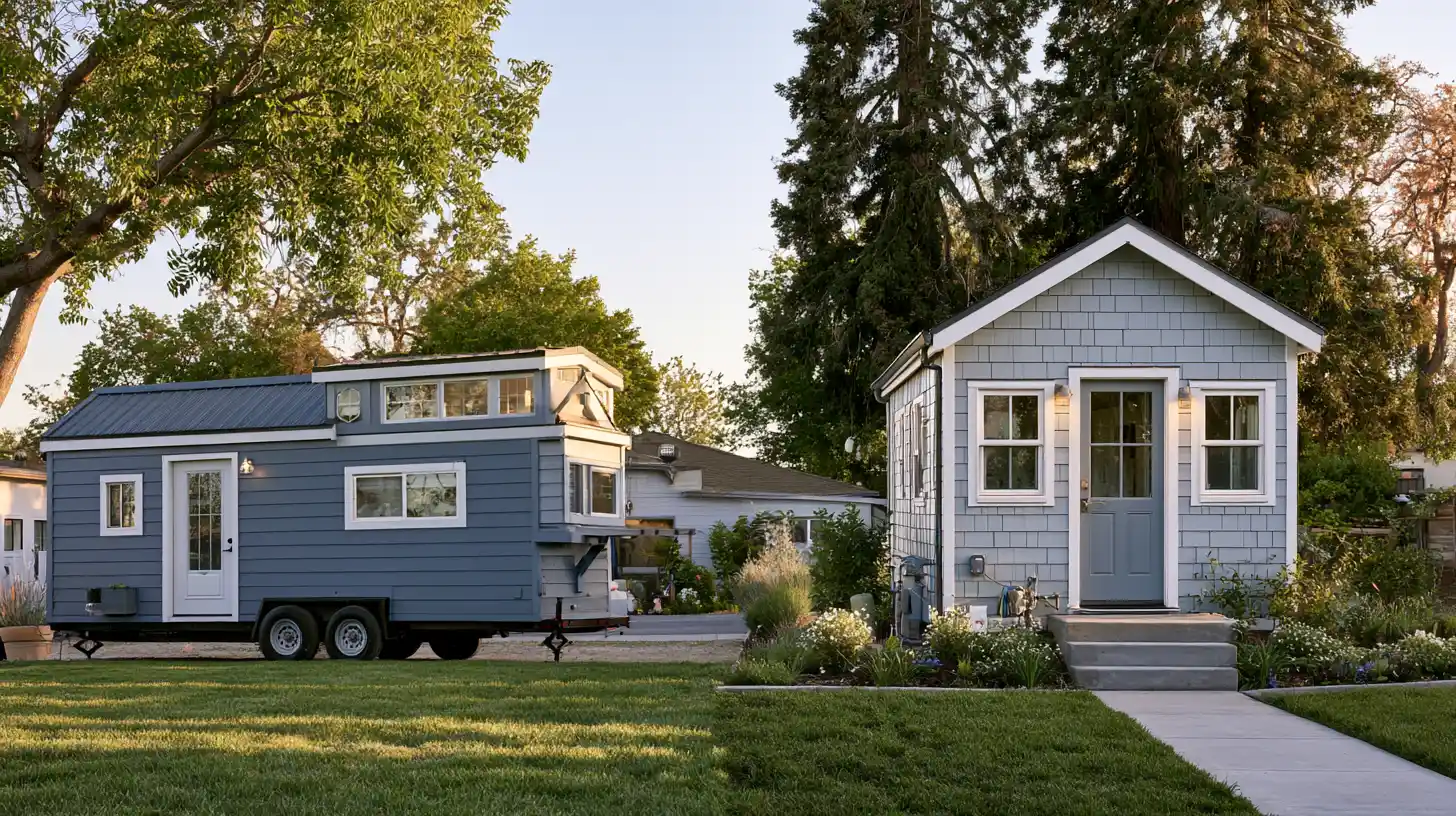
California doesn’t have a single legal category called “tiny home.” The state’s housing agency (HCD) has said as much: a tiny house has to fit into an existing approved category before it can be legally occupied. That’s the rule that quietly undoes a lot of backyard plans.
The recognized paths look like this:
- An ADU on a lot with a primary residence.
- A site-built house on a foundation, built to the California Building Standards Code.
- A factory-built home.
- A manufactured home.
- An RV, park trailer, or tiny home on wheels, only where a local ordinance allows it.
Zoning and local rules vary widely across California cities and counties, and some prohibit certain off grid setups outright. Living in an unpermitted structure is illegal and subject to enforcement. This is the honest pivot: an off grid tiny house is possible, but not as a loophole. The right approach is to build one correctly as a real, permitted dwelling you can actually live in.
Can a Tiny Home Be an ADU in California?
Yes, possibly. HCD’s March 2026 ADU Handbook says a tiny home is “possibly” an ADU because “tiny home” is an industry term, not a legal one. If the unit meets the ADU definition in Government Code section 66313, it falls under California ADU law, which is generally the friendliest path for a homeowner.
In plain terms, an ADU is an attached or detached residential unit with complete independent living facilities on a lot that has a proposed or existing primary residence. “Complete” means it has permanent provisions for living, sleeping, eating, cooking, and sanitation. A tiny house that includes all of that, on the right lot, can qualify. Even with limited space, thoughtful tiny house design can fit those functions into a small, comfortable footprint.
This path is popular for a reason. California ADU permits grew from 1,336 in 2016 to 30,354 in 2024, and ADUs made up more than 26.6% of all homes permitted statewide that year. Manufactured homes can also qualify as ADUs under the same law, which gives homeowners more than one way to reach a small, code-compliant unit. The takeaway: if you want a tiny house you can legally live in long term, the ADU route is usually the cleanest one to design around.
Tiny Home on Wheels vs. Tiny ADU: Which Is Actually Legal to Live In?
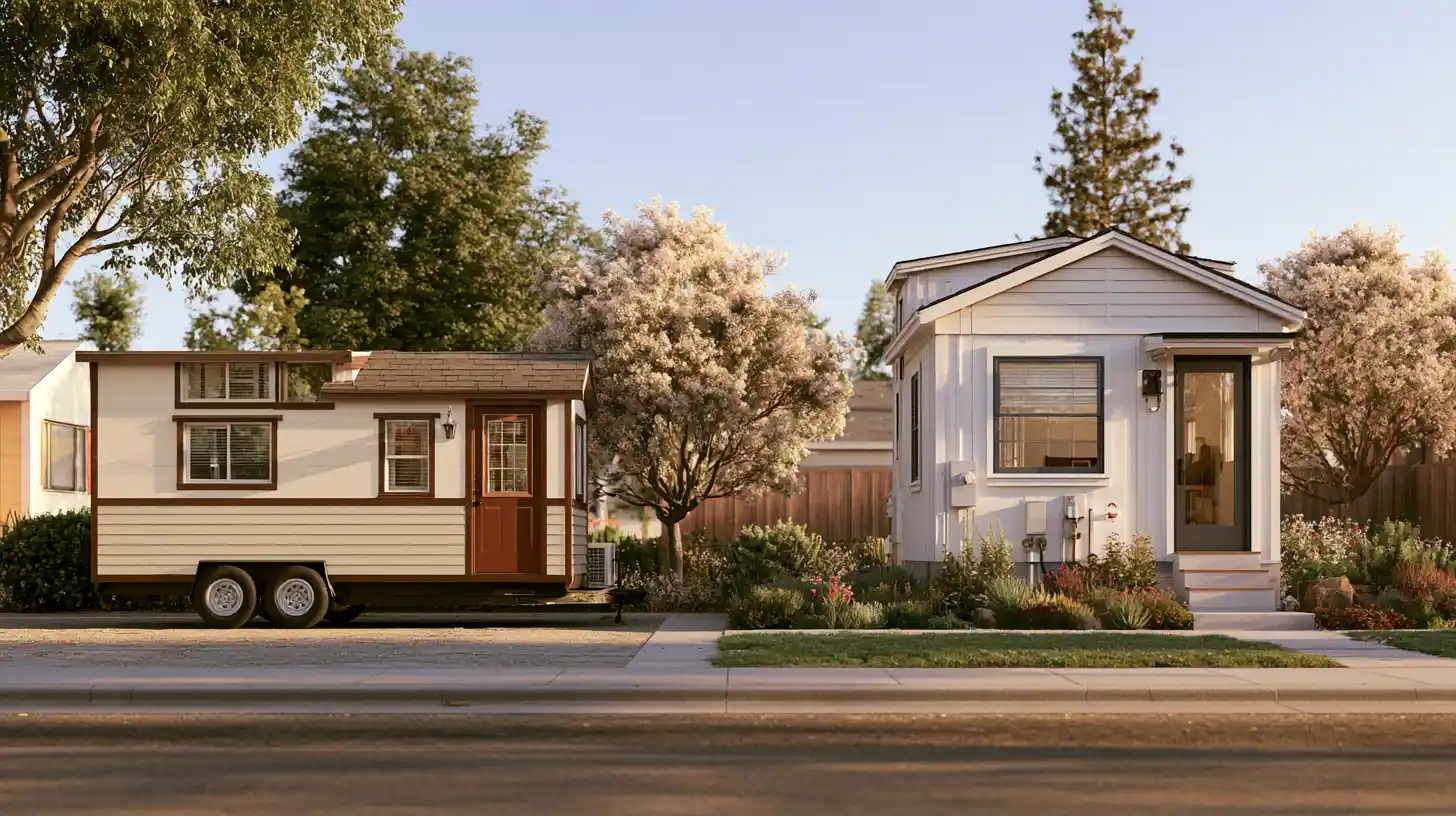
This is the category people get wrong most often. A tiny home on wheels (THOW), an RV, or a park trailer is not automatically legal for permanent, full-time living. HCD is clear that RVs aren’t intended as permanent dwellings, and unless a local ordinance says otherwise, they generally may only be occupied in mobilehome parks or special occupancy parks. Park trailers are treated as temporary or seasonal, not year-round homes.
There are construction standards behind these units too. California Health and Safety Code section 18027.3 requires RVs built after mid-2005 to meet NFPA 1192 and park trailers to meet ANSI A119.5, with a label or insignia showing compliance.
Some California jurisdictions do allow movable tiny homes or THOWs under local ordinances, sometimes even as an ADU. But state law does not make every grid tiny house legal for permanent residential use everywhere. If your goal is a long-term home you can count on, a foundation-based, code-compliant dwelling like an ADU is almost always the steadier path for off grid living. Your local planning department has the final word on what your property allows.
What Off-Grid Systems Need Approval? Solar Power, Water, and Waste
This is where “off grid” meets the permit counter. Each system carries its own requirements, from power and heating to plumbing.
Solar Panels, Battery Storage, and Off-Grid Capabilities
Solar power is the most popular off grid power source, and quality solar panels are the backbone of most off grid capabilities. A 1kW array is common for a tiny house, and sizing a solar panel system means calculating your daily watt-hour energy usage, then adding batteries for storage and often a generator for backup electricity. Wind turbines cost more and need more space, so most homeowners skip them. Here’s the code reality: newly constructed detached ADUs must provide solar panels under the California Energy Code, with some exceptions (conversions of existing space are exempt). They also have to be battery-storage-ready unless the electric service is 125 amps or less. Important nuance: “solar required” is not the same as “fully disconnected from the grid.” Many code-compliant ADUs use solar power and stay connected, which also makes running air conditioning and electric heating far more reliable through a hot summer.
Water Supply
Water can come from a municipal connection, a well, or rainwater harvesting where it’s allowed. Systems that collect water for drinking need water filtration plus UV sterilization to be potable, and a 100-liter clean water tank is a common setup. But Health and Safety Code section 17920.3 treats a dwelling without hot and cold running water to proper plumbing fixtures as having inadequate sanitation. An informal tank-and-hose arrangement isn’t automatically compliant, and assuming it is can stall the whole project. If you want a large bathroom or standard fixtures, the plumbing still has to meet code.
Wastewater, Septic, and Composting Toilets
Wastewater is usually the make-or-break issue for off grid living. Options are a sewer connection or a septic system, formally called an onsite wastewater treatment system (OWTS). The State Water Resources Control Board regulates OWTS under a policy updated in 2023, and California already has over a million septic systems in use. Septic can be expensive to install and maintain. Greywater from sinks and showers can sometimes be reused, and composting toilets convert human waste into compost, but neither should be assumed to satisfy California sanitation code on its own. These are common solutions in rural areas, yet you still have to confirm the approved way to manage waste before you commit to anything.
California ADU Rules That Work in a Homeowner’s Favor
Permitting has a reputation as a nightmare. For ADUs, state law actually builds in protections that make the process more predictable than most people expect:
- Ministerial approval: ADUs and JADUs under state law are approved or denied without a discretionary hearing.
- 60-day review: when a primary dwelling already exists on the lot, the agency must approve or deny a completed application within 60 days.
- Size protections: local rules must allow at least 850 square feet (1,000 for units with more than one bedroom), with a 1,200-square-foot fallback maximum where a jurisdiction lacks a compliant ordinance.
- Setback protections: lot-coverage rules can’t block an 800-square-foot ADU with four-foot side and rear setbacks.
- Impact fees: ADUs of 750 square feet or less are exempt from impact fees, which is a real advantage for a tiny footprint.
- Fire sprinklers: can’t be required for the ADU if they aren’t required for the primary residence.
- Parking: capped at one space per unit or bedroom, with several exemptions.
Local jurisdictions still fill in specifics, so your city or county decides the fine print. But the framework is designed to move ADUs forward, not stall them.
Vacant Land vs. Backyard: Two Different Approval Paths
Where you put the tiny house changes everything. A backyard ADU is a well-defined path because ADU law assumes a proposed or existing primary residence already sits on the lot. That structure anchors the whole approval.
A tiny home on your own land, if it’s raw and vacant, is a different, often harder situation. There, the tiny house usually has to be a code-compliant primary dwelling with its own approved water, wastewater, road access, and utilities including power and heating. Finding land that legally supports that, and confirming it before you buy, is a genuine challenge people underestimate. This isn’t legal advice, so review any specific parcel with the local planning department before you spend a dollar.
Feasibility Checklist Before You Buy or Build a Tiny House
Answer these before you order plans or put money down on a unit:
- Is there an existing or proposed primary dwelling on the lot?
- Is the unit on wheels or on a foundation?
- Is the lot zoned for residential use?
- Is approved water available?
- Is sewer or a septic/OWTS system feasible?
- Is fire access required?
- Is the solar panel system and battery storage code-compliant for your energy needs?
- How will you handle heating, cooling, and air conditioning off grid?
- Does the local jurisdiction allow this structure type?
- Will it qualify as an ADU, a manufactured home, or another legal dwelling?
One more thing worth planning for: off grid systems carry ongoing maintenance that costs time and money. A trusted local builder can also guide choices like a durable metal roof, well-detailed walls, quality insulation, and materials such as structural insulated panels that hold temperature and support real sustainable living practices. Answer these questions honestly before you spend, and you’ll avoid the expensive surprises and settle into tiny house life with far less stress.
How Golden State ADUs Helps You Build It the Right Way
We’re a full-service, design-build ADU specialist, and ADUs are all we do. Through our in-house design and engineering arm, Golden State Design & Engineering, we handle the entire path under one roof: site feasibility, architectural design, permitting, and construction. That means no coordinating separate architects, engineers, and builders, and no one pointing fingers when something goes sideways.
We talk budget openly and upfront, so you understand the real numbers before committing (we don’t publish a fixed price, because every property is different). Every project carries a 10-year structural integrity warranty and a 1-year fit-and-finish warranty. We’re based in Sacramento and build ADUs throughout California. Most of all, you get a clear answer on what’s actually buildable on your property, whether the goal is an off grid retreat close to nature, rental income, or a home for family, without the fantasy or the guesswork. Small homes done right can genuinely enrich a family’s life, and that’s the freedom we help homeowners design toward.