
Key Takeaway
Tiny home financing loan options beyond traditional ADU financing depend entirely on how your structure is legally classified: real property on a foundation, a HUD-code manufactured home, a modular unit, an RV, or personal property. A code-built tiny home or ADU on a permanent foundation qualifies for the widest range of loans, including home equity loans, HELOCs, and construction-to-permanent programs. Movable or wheeled units are limited to RV loans, chattel loans, or personal loans, which carry shorter terms and higher interest rates. The financing decision is made at the design stage, not at the bank.
Yes, you can finance a tiny home beyond traditional ADU financing, but the loan you qualify for depends on what your tiny home legally is: real property on a foundation, a manufactured home, an RV, a modular unit, or personal property. The label “tiny home” tells a lender almost nothing. The legal classification tells them everything. If you’re a homeowner exploring how to pay for a compact backyard home, whether you’re here in the Sacramento region or anywhere in California, this is the piece that saves you from picking a loan before you understand what you’re building.
Here’s the part most homeowners miss: the financing door opens or closes during design, not at the bank. A tiny home (Accessory Dwelling Unit, or ADU, being one common form) built on a permanent foundation to local code has a very different financing universe than the same square footage on a trailer. This article gives you a classification-first map of your loan options, from home equity products to manufactured-home programs to specialized paths like chattel and RV loans, and it shows you what shapes access to each one. Tiny homes cost roughly $82,500 on average as of 2025, and land is a separate expense, so getting the funding path right the first time matters. Tiny house financing is not a single product you shop for. It is a set of financing options that open and close depending on choices you make long before you compare interest rates.
Why Tiny House Financing Is Different From Standard ADU Financing
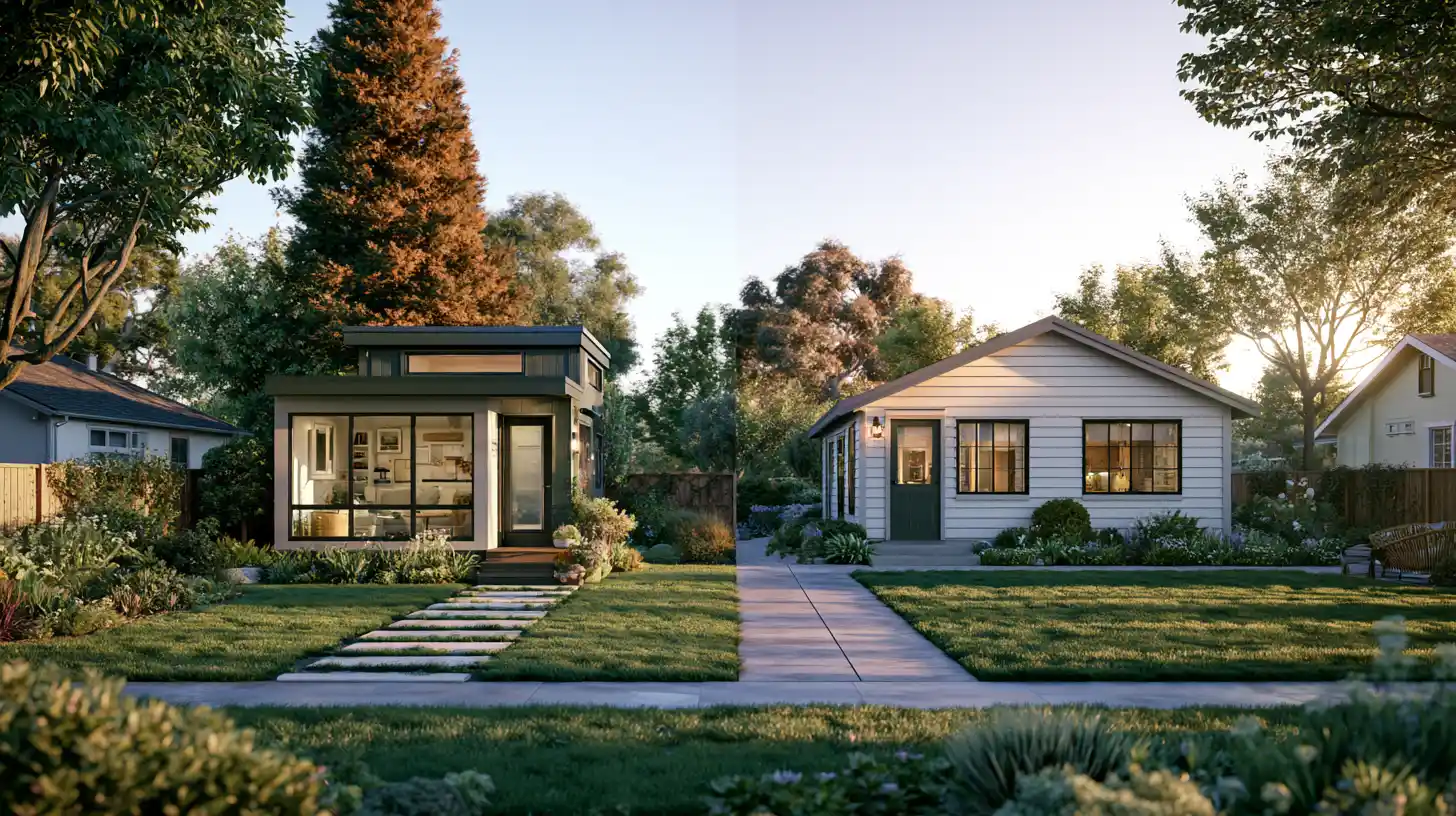
“Tiny home” is a marketing term. Lenders don’t have a “tiny home” box to check. They classify your structure by what it legally is, and that classification decides which loans you can even apply for. A standard site-built ADU attaches cleanly to home equity or renovation financing because it becomes part of your real property. A freestanding or wheeled tiny house can fall outside those rules entirely.
Traditional loans are less common for tiny homes for exactly this reason. Many compact units don’t meet the size, foundation, or classification requirements that a traditional mortgage demands, which is why a lot of tiny homes don’t qualify for FHA, VA, or USDA financing without meeting specific property standards first. There’s also a value question. A tiny home on wheels or one treated as personal property often depreciates over time, more like a vehicle than a house. A code-built ADU on a foundation does the opposite: it adds real property value and can be appraised as part of your home, which is what makes home equity and cash out refinancing possible down the road. For homeowners chasing an incredibly affordable option, the classification you choose shapes whether the financing stays affordable too.
Everything downstream depends on five legal classifications. We’ll detail each one in the next section, but here they are so you can see the shape of the decision:
- Real property on a permanent foundation, built to local code.
- HUD-code manufactured home, built to federal standards in a factory.
- Modular or code-built unit, factory-built to state and local code, then set on a foundation.
- RV or park model RV, certified for recreational use.
- Personal property, movable and financed outside a mortgage.
Certification and construction choices can improve your financing options considerably. A unit built and titled as real property unlocks the widest, lowest-cost menu, including home equity loans, a home equity line of credit, and construction loan products that a wheeled tiny house simply cannot reach. That’s why the classification gets decided at the design table, long before you talk to a lender. Plan the structure right, and the financing conversation gets easier. Plan it wrong, and you can accidentally lock yourself out of the loan you were counting on, along with the lower interest rates that come with it.
What Kind of Tiny Home Are You Building? A Classification-First Decision Tree
This is the section that changes how you shop for money. Before you compare interest rates, answer one question: what is this structure, legally? Walk through the six types below and find yours. Each has a defining trait and a likely legal classification, and that classification points you toward the right financing. A seasoned tiny house builder can help you settle this question before a single drawing is finalized.
Code-Built Tiny Home or Accessory Dwelling Unit on a Permanent Foundation
This is a small dwelling built on-site to your local building code and fixed to a permanent foundation. It’s real property. The International Code Council defines a tiny house under the 2021 IRC Appendix AQ as a dwelling of 400 square feet or less, excluding lofts. Important caveat: IRC Appendix Q/AQ isn’t automatically law. It only applies where a jurisdiction has adopted it by ordinance, and your local building codes govern whether it applies to you. This is the classification with the most financing options, because a code-built ADU behaves like the rest of your house. It qualifies for a traditional mortgage refinance, a home equity loan, a home equity line of credit, and renovation programs, all at rates a wheeled unit will never see.
HUD-Code Manufactured Tiny Home
A manufactured home is factory-built on a permanent chassis to federal standards. Under HUD’s rules, a manufactured home is at least 8 body feet wide or 40 body feet long in travel mode, or 320 square feet or more when erected on site. That minimum square footage matters, because some programs set their own floor. Any U.S. manufactured home built after June 15, 1976 must be certified to HUD’s Manufactured Home Construction and Safety Standards and carry a HUD certification label on each transportable section. A factory-built tiny home may or may not be HUD-code, and that difference reshapes your loan options. A HUD-code unit can qualify for FHA Title I and, once converted to real property, for conventional financing. A non-HUD factory unit usually cannot.
Modular or Factory-Built Tiny Home
A modular unit is built in a factory to state and local building code, then delivered and set on a foundation. A prefab tiny home in this category is built to the same code as a site-built home, so it’s typically classified as real property once installed. That puts it closer to the code-built ADU end of the spectrum than to the RV end, which means the same construction loan and home equity paths open up once the unit is set and titled.
Tiny Home on Wheels
Many tiny homes are built on trailers. Classification here hinges on certification and how you’re legally allowed to use the unit. A home on wheels is often treated as an RV or as personal property rather than real estate, which pushes it toward RV loans, chattel financing, or a personal loan instead of a mortgage. It also usually means shorter loan terms, higher interest rates, and larger monthly payments relative to what you borrow.
Park Model RV
The RV Industry Association describes a park model RV as a unit built on a single trailer chassis, mounted on wheels, with a gross trailer area generally not exceeding 400 square feet in setup mode. RVIA is clear that recreational vehicles are designed for temporary, seasonal, and recreational use, not permanent housing. That matters for both financing and legality, because most lenders will only offer an RV loan or a personal loan for a unit built this way.
Personal Property or Chattel
If the unit is movable and not attached to land, it’s often treated as personal property. A chattel loan is secured by the home but not the land, and it lives outside the mortgage world. This is common for movable tiny homes that never convert to real estate, and it is often the only path other than a personal loan for a structure that stays legally movable.
One caution worth repeating: the 400-square-foot figure is a code concept, not a universal loan-approval rule. Meeting a size definition doesn’t guarantee any specific loan. Zoning, titling, and which building codes a jurisdiction has adopted all vary by location, so verify local requirements before you commit to a classification. This is exactly the kind of feasibility question a design-build ADU specialist sorts out early, so your structure and your financing plan actually match.
A Quick Recap of Traditional Home Loans for ADUs
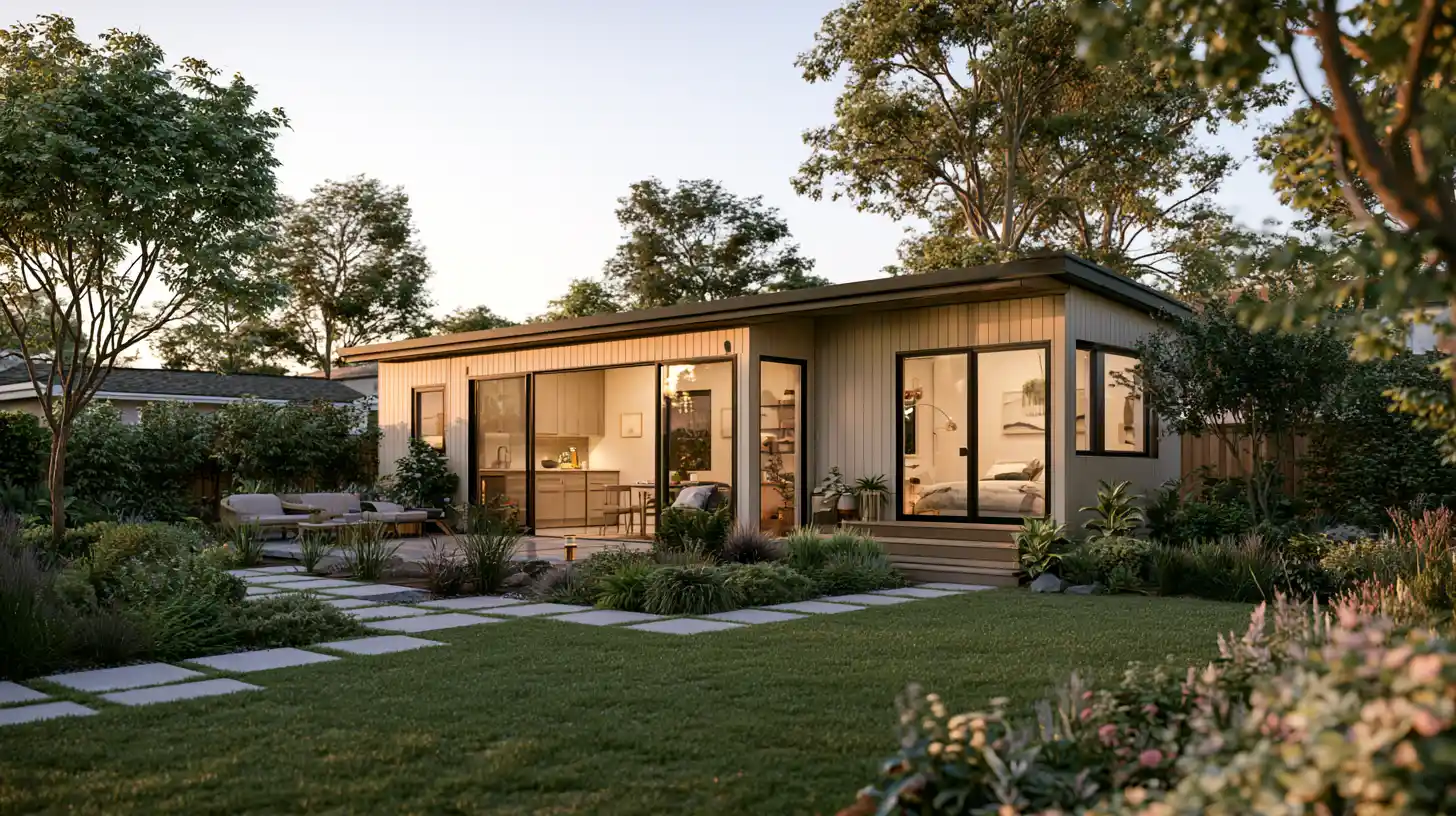
If your tiny home will be real property, the traditional ADU financing menu is likely your starting point. We’ll keep this short, because the real focus of this article is what comes after these options. But you need the baseline to see the contrast, and most of these traditional loans depend on the equity you hold in your existing home. Traditional home loans reward a home that appraises as part of your real property.
Home Equity Loan and HELOC
Both let you borrow against your existing equity in your home. A home equity loan gives you a lump sum with fixed monthly payments, which makes budgeting predictable across the life of the build. A home equity line of credit (HELOC) works more like a credit card secured by your home, with a draw period you pull from as needed; this equity line of credit structure lets you borrow only what each phase of construction actually requires. A line of credit HELOC typically carries a variable rate, so your interest rates can move over time, while a home equity loan locks your rate at a fixed interest rate from the start. How much equity you can access depends on the lender, but you may be able to borrow up to around 85% of your home’s value, and this home or property borrowing is a popular way to fund ADU projects because rates are generally lower than an unsecured personal loan. Your credit score, income, and existing debt still shape the rate you’re offered. The Consumer Financial Protection Bureau is blunt about the risk: these are secured loan products tied to your house, and your home is on the line if you can’t keep up with payments.
Cash-Out Refinance
A cash out refinancing replaces your current mortgage with a larger one and gives you the difference in cash to fund the build. Cash out refinancing replaces your accumulated home equity in a single new loan, which can simplify your monthly payments into one mortgage rather than a mortgage plus a separate home equity loan. The catch in today’s current economic climate is real: if you’re sitting on a low mortgage rate, refinancing means giving it up. For many homeowners, that trade doesn’t pencil out, especially when current interest rates sit well above the rate on their existing traditional mortgage, which is part of why they start looking beyond the traditional menu in the first place.
Construction and Renovation Loans
A construction loan funds the build in stages and then, in its construction-to-permanent form, converts to a standard mortgage loan once the project is complete. Renovation loans are designed to finance improvements, including adding an ADU, and roll the cost into your mortgage. These are strong fits for real-property ADUs, and several show up again below in their program-specific forms. Because a construction loan releases money as work is finished across the draw period, it also keeps you from paying interest on the full amount from day one, which can lower your effective cost compared with a lump-sum personal loan.
Tiny House Loans and Loan Options Beyond Traditional ADU Financing
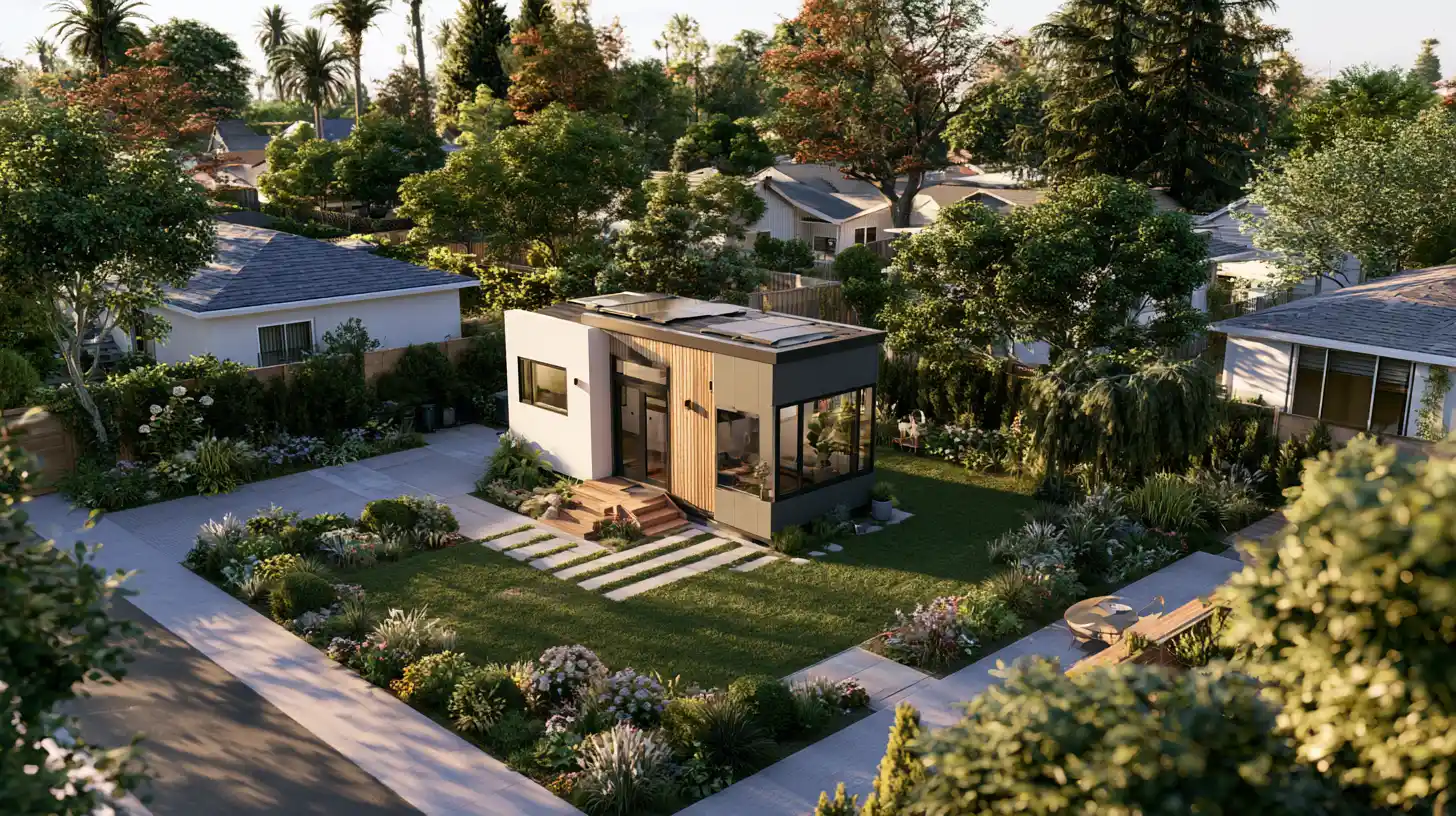
When a tiny home falls outside standard mortgage rules, or when you’d rather not touch your existing mortgage, several specialized financing options open up. Each one ties back to the home’s classification, so the option that fits a wheeled unit is not the option that fits a HUD-code manufactured home. As you read these, pay as much attention to the watch-outs as to the availability. A loan you can get isn’t automatically a loan you should take. Here’s how to think through the “beyond” menu and secure financing that actually matches what you’re building.
Here’s how the main financing paths beyond traditional ADU loans compare at a glance. The figures below come straight from the details in each section that follows. Treat them as starting points that vary by lender, borrower, and location.
| Financing Path | Best-Fit Classification | Key Figures From This Article | Watch-Out |
|---|---|---|---|
| Personal installment loan | Movable or personal property; smaller builds | Roughly $1,000 to $100,000; usually unsecured | Higher interest rates and shorter terms mean larger monthly payments |
| RV loan | Tiny home on wheels, RVIA or ANSI A119.5 certified | Secured by the unit; longer terms than a personal loan | Certification is not legal approval to live in the unit permanently |
| Chattel / personal property loan | Home titled as personal property, not the land | About 42% of manufactured home purchase loans; under 30% approval rate vs. 70%+ for site-built | Shorter terms, higher rates, fewer consumer protections |
| FHA Title I manufactured home loan | HUD-code manufactured home | Limits from $43,377 (lot only) up to $237,096 (multi-section home and lot) | HUD-code units only; not for wheeled or site-built tiny homes |
| FHA 203(k) | Real-property ADU on a home at least one year old | May count 50% of estimated ADU rental income to qualify | Wheeled or personal-property units don’t qualify |
| Fannie Mae HomeStyle / Construction-to-Permanent | Real-property ADU, including HUD-code once converted | Up to 3 ADUs under UAD 3.6; rental income capped at 30% of qualifying income | Policy actively evolving in 2026; confirm current Selling Guide |
| Freddie Mac CHOICERenovation | Real-property ADU on 1-, 2-, or 3-unit property | One ADU allowed; manufactured ADU needs at least 400 sq ft | Two or more ADUs, or a 4-unit property with an ADU, are ineligible |
| USDA guaranteed loan | Permanent residence in a USDA-eligible rural area | 90% loan note guarantee supporting up to 100% financing | Location and income limits gate eligibility |
| VA-backed loan | Manufactured home or lot for eligible service members | Min. 400 sq ft single-wide, 700 sq ft double-wide | Only available to qualifying veterans and service members |
| Reverse mortgage / HECM | Homeowners age 62 and older | Available only to homeowners 62 and older | Draws down home equity; weigh long-term impact carefully |
Personal Loan and Unsecured Options to Finance a Tiny Home
A personal loan is a closed-end installment loan: you receive the money upfront in a lump sum and repay it in fixed monthly payments over a set term. The CFPB describes exactly this structure, and lenders weigh your credit score, credit history, income, existing debts, the loan amount, and term length when deciding whether to approve you. A strong credit score can meaningfully lower the interest rates you’re offered, while a weaker one can push them higher or shrink the amount you qualify for. Many online lenders compete in this space, and a personal loan commonly ranges from about $1,000 to $100,000. Tiny house loans structured this way are one of the most accessible paths when you have no equity to tap.
Most personal loans are unsecured, meaning no collateral backs the loan. That’s the appeal and the cost. These unsecured loans based on your credit profile make the process faster and simpler, with no appraisal or title work tied to the tiny home itself, and no down payment required to close. But an unsecured personal loan carries a higher interest rate typically than home equity or mortgage products, because the lender is taking on more risk, and shorter loan terms often mean larger monthly payments. That trade-off makes a personal loan a reasonable fit for smaller compact builds under $100,000, especially when you don’t have equity to tap or don’t want a lien on your primary residence. For a modest backyard unit, the simplicity can outweigh the higher rate. For a full six-figure project, the math usually points toward home equity or a construction loan instead. Tiny house financing through a personal loan works best when speed and simplicity matter more than squeezing out the lowest possible rate.
RV Loans for Tiny Homes on Wheels
If your tiny home is built on a trailer to recreational vehicle standards, an RV loan may be available. These are secured loans, with the unit itself as collateral, and they generally require the tiny home to be certified to RVIA standards or built under ANSI A119.5. That certification is the gatekeeper. No certification, no RV loan. Lenders that offer RV loans often stretch loan terms longer than a personal loan, which can lower your monthly payments, but they usually still carry higher interest rates than a traditional mortgage on real property.
Now the caution, and it’s an important one. RV certification is not the same as legal approval to live in the unit permanently or to use it as an ADU. RVIA states plainly that recreational vehicles are designed for temporary, seasonal, and recreational use, not permanent residential housing. Federal regulation at 24 CFR 3282.15 draws the same line, exempting certain RVs from manufactured-home rules precisely because they’re built for recreational use, not as a primary residence. So an RV loan can finance the structure, but it does nothing to make that structure a legal permanent dwelling on your lot. If your goal is a real ADU your city will recognize, a wheeled RV-certified tiny house is often the wrong tool, no matter how easy the financing looks.
Chattel Mortgage and Personal Property Loans
A chattel loan, sometimes called a chattel mortgage, is secured by the home but not the land it sits on. It’s the standard financing tool when a tiny home or manufactured home is titled as personal property rather than real estate. If your unit is movable and won’t be converted to real property, this is often the path lenders steer you toward. If you also need to buy the ground it will sit on, that’s a separate land loan question, since a chattel loan covers only the structure and never the parcel underneath it.
Chattel loans are common in this space. The CFPB found that roughly 42% of manufactured home purchase loans were chattel loans. But the trade-offs are real, and you should understand them before signing. Chattel loans usually carry shorter loan terms and higher interest rates than traditional loans, and they come with fewer consumer protections. Approval is also harder to come by. Lenders typically require a stronger file here, and the CFPB reported that fewer than 30% of manufactured home loan applications were approved, compared with more than 70% for site-built home loan applications, so your credit score and down payment carry extra weight in winning lender approval.
None of that makes chattel financing a bad choice. It can be simpler and faster when your unit is legitimately personal property. It just means you should compare the annual percentage rate, the loan terms, the fees, and the protections against what a real-property path would offer. Often the smartest move is to design the project so the home can be titled as real estate in the first place, which opens the door to better financing and lower monthly payments.
FHA Title I Manufactured Home Loans
HUD’s Title I Manufactured Home Loan Program insures loans made by approved lenders for a manufactured home, a lot, or a home-and-lot combination. One useful feature: the home can be classified as personal property or real estate depending on your situation, so this loan specifically works in scenarios where a conventional mortgage won’t. This path is only for HUD-code manufactured homes, not for wheeled tiny homes or site-built units. If you need to finance the ground separately, note that the lot-only option below functions much like a land loan within the same program.
Here are the current nationwide loan limits and maximum terms. Treat these as indexed figures that HUD adjusts periodically, and recheck them before you rely on them:
| Title I Loan Type | Loan Limit | Maximum Term |
|---|---|---|
| Manufactured home, single-section | $105,532 | 20 years + 32 days |
| Manufactured home, multi-section | $193,719 | 20 years + 32 days |
| Combination, single-section home and lot | $148,909 | 20 years + 32 days |
| Combination, multi-section home and lot | $237,096 | 25 years + 32 days |
| Manufactured home lot only | $43,377 | 15 years + 32 days |
Programs like this set minimum loan amounts and their own rules, so ask a lender about any minimum loan threshold before you apply. If your manufactured home will sit on a leased lot, HUD requires the initial lease term to run at least three years, and the lease must provide at least 180 days’ written notice before termination. Title I doesn’t require the large down payment a big mortgage might, which is part of why it’s a practical option for manufactured units that fall below the price of a full site-built home. The longer loan terms also keep monthly payments manageable relative to a short-term personal loan.
FHA 203(k) Financing for Eligible ADU Work
The FHA 203(k) program insures mortgages for buying or refinancing and rehabilitating a home that’s at least one year old, and HUD lists single-family homes with an eligible accessory dwelling unit (ADU) among the qualifying property types. That makes 203(k) a useful bridge between traditional ADU financing and broader renovation financing: you can fold the cost of adding or improving an accessory dwelling unit into a single FHA-insured loan, often with a smaller down payment than conventional programs require.
There’s a qualifying advantage worth knowing. FHA’s ADU policy allows lenders, for some borrowers, to count 50% of the estimated rental income from a new ADU the borrower plans to add, such as a garage or basement conversion, when qualifying under the Standard 203(k) program. That can improve your debt to income ratio enough to help a borrower who’s close on the numbers cross the line. This isn’t a universal solution for every tiny home. The unit and the project have to meet FHA property and program requirements, and a wheeled or personal-property unit won’t fit. But for a homeowner turning existing space or a code-built addition into an income-producing ADU, 203(k) deserves a serious look.
Fannie Mae HomeStyle Renovation and Construction-to-Permanent
Fannie Mae supports ADU financing through two main routes: HomeStyle Renovation, which folds the cost of building or improving an ADU into a single purchase or refinance loan, and construction-to-permanent financing, which funds the build in draws and then converts to a standard mortgage once the unit is complete. Both require the ADU to be real property, which puts a wheeled or personal-property unit out of reach and rewards the homeowner who settled the classification question early.
Two details shape how much these programs can do for you. Under the UAD 3.6 appraisal framework, up to three ADUs may be recognized on a property, which is a meaningful expansion over the older single-unit thinking. And when you’re using projected rental income from the new unit to qualify, that income is capped at 30% of your qualifying income, so it can help you clear a debt-to-income hurdle but won’t carry a marginal application on its own. A HUD-code manufactured home can also work here once it’s been converted to real property and titled accordingly.
One caveat matters more than usual on this path: Fannie Mae’s ADU policy is actively evolving through 2026. Appraisal standards, unit counts, and rental income treatment have all moved in recent guide updates. Confirm the current Selling Guide language with your lender before you build a budget around any specific figure in this section.
The Remaining Paths: Freddie Mac, USDA, VA, and Reverse Mortgages
Four more options round out the menu, each gated by something other than the structure itself.
Freddie Mac CHOICERenovation allows one ADU on a 1-, 2-, or 3-unit property, financed through a purchase or refinance loan. A manufactured ADU must be at least 400 square feet to qualify. Two or more ADUs, or a 4-unit property with an ADU, are ineligible, so this is the narrower of the two agency renovation programs.
USDA guaranteed loans carry a 90% loan note guarantee that supports up to 100% financing, which makes them one of the few no-down-payment paths available. The gate here is geography and income: the property must be your permanent residence in a USDA-eligible rural area, and household income limits apply. Much of the Sacramento region’s outlying areas qualifies, but eligibility is parcel-specific and worth checking before you plan around it.
VA-backed loans are available to qualifying veterans and service members for a manufactured home, a lot, or both. Minimum size requirements apply: 400 square feet for a single-wide and 700 square feet for a double-wide. For an eligible borrower, this is often the lowest-cost financing available for a manufactured unit.
Reverse mortgages and HECMs are limited to homeowners age 62 and older and convert existing home equity into accessible funds without monthly payments. The trade-off deserves genuine weight rather than a footnote: the loan draws down the equity in your home and affects what passes to your heirs. It can be the right tool for an older homeowner building a unit for a caregiver or family member, but it’s worth working through with a HUD-approved counselor before committing.
Where This Leaves You
The through-line in every section above is the same. The loan you end up with is largely determined by decisions you make at the design table, not at the loan officer’s desk. A code-built unit on a permanent foundation reaches the widest, cheapest menu. A wheeled unit reaches RV loans, chattel financing, and personal loans, all with shorter terms and higher rates, and none of which make the structure a legal permanent dwelling. If those two outcomes look meaningfully different to you, the time to sort it out is before the plans are finalized.
Frequently Asked Questions
Can you get a mortgage on a tiny home?
It depends entirely on classification, not size. A tiny home or ADU built to local code on a permanent foundation is real property, and it qualifies for the full range of mortgage-adjacent financing: home equity loans, HELOCs, cash-out refinancing, construction-to-permanent loans, and renovation programs like FHA 203(k), Fannie Mae HomeStyle, and Freddie Mac CHOICERenovation. A tiny home on wheels generally cannot get a mortgage, because lenders treat it as an RV or personal property rather than real estate. A HUD-code manufactured home sits in between: it can use FHA Title I as personal property, or convert to real property and access conventional financing.
Why is financing a tiny home on wheels more expensive?
Two reasons. First, the collateral behaves differently. A wheeled unit or one titled as personal property tends to depreciate like a vehicle, while a code-built ADU on a foundation adds appraisable value to your real property. Second, the available products are structurally more expensive. RV loans, chattel loans, and personal loans carry higher interest rates and shorter terms than mortgage products, which means larger monthly payments for the same amount borrowed. Chattel loans also come with fewer consumer protections and are harder to get approved: the CFPB found fewer than 30% of manufactured home loan applications were approved, compared with more than 70% for site-built home loans.
Does RV certification mean I can legally live in a tiny home full-time?
No, and this is one of the more costly misunderstandings in the tiny home world. RVIA and ANSI A119.5 certification make a wheeled unit financeable through an RV loan, but the RV Industry Association is explicit that recreational vehicles are designed for temporary, seasonal, and recreational use rather than permanent housing. Federal regulation at 24 CFR 3282.15 draws the same line. Certification finances the structure; it does nothing to make it a legal permanent dwelling on your lot. If your goal is an ADU your city will recognize and permit, an RV-certified unit is usually the wrong tool regardless of how straightforward the financing looks.