
AI Overview:SB10 empowers Sacramento and other California cities to rezone single-family properties for up to ten units, aiming to address housing shortages while retaining local flexibility. Homeowners and ADU builders should understand how SB10 interacts with existing ADU rules, parking, permitting, and neighborhood overlays to maximize property value and navigate the evolving regulatory landscape.
Sacramento’s SB10: What Homeowners Need to Know About New Rezoning Rules, ADUs, and Increased Density
What is SB10? A Local Perspective for Sacramento Homeowners
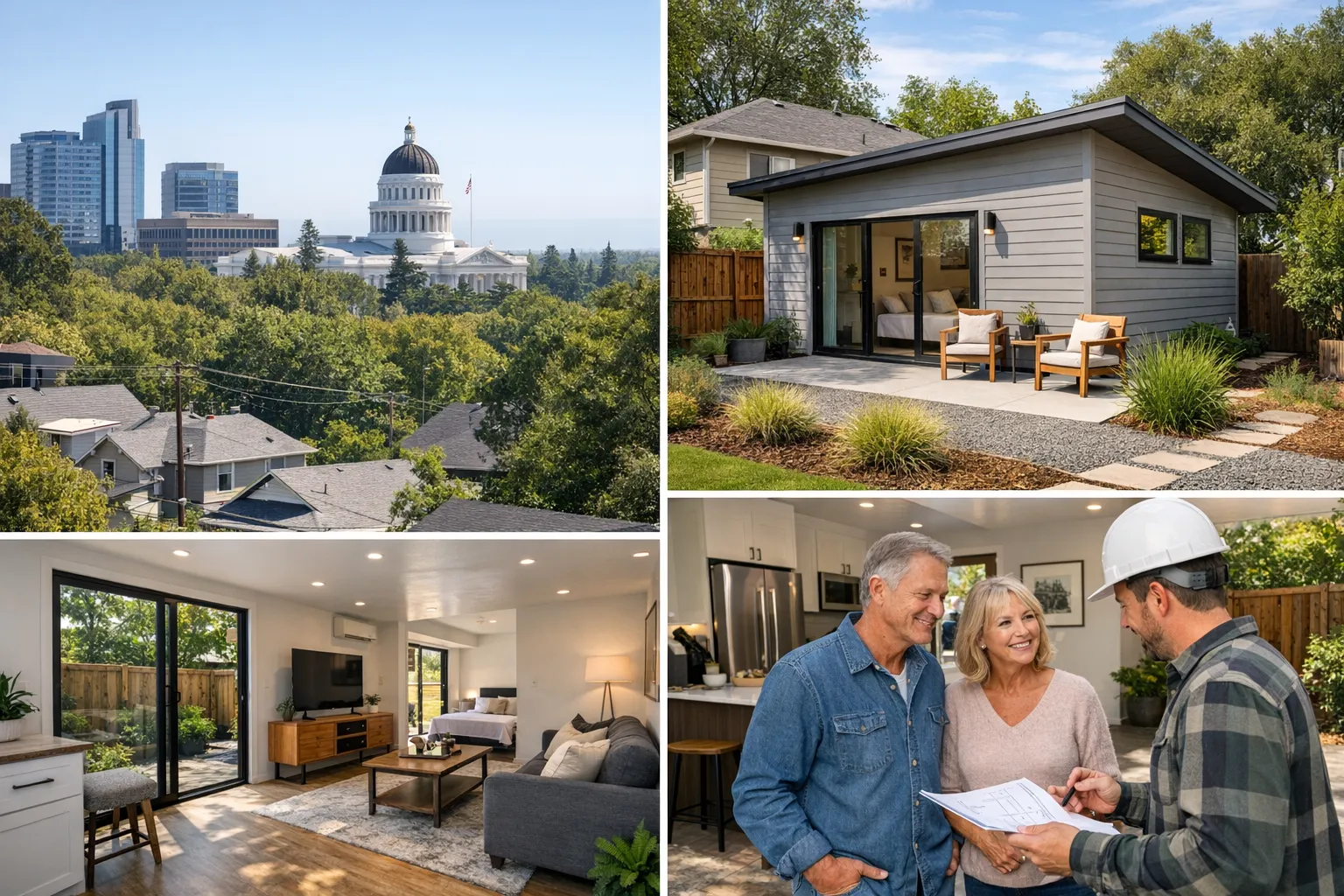
SB10 Bill at a Glance: Purpose and Statewide Context
Senate Bill 10, or SB10, is California’s legislative response to one of the state’s most persistent challenges: a critical housing shortage. Unlike previous state mandates, SB10 invites – but does not require – local governments to voluntarily upzone eligible parcels for up to ten residential units per lot. This means, for the first time, city councils like Sacramento’s can approve higher-density housing in established neighborhoods, without the threat of litigation or requiring cities to rewrite their entire zoning code.
Why Sacramento is in the Spotlight: Local Housing Needs and Policy Response
With Sacramento’s population growth, low housing inventory, and increasing rents, the city stands front and center in the push for innovative housing solutions. SB10 offers an optional tool for increasing density, expanding beyond detached ADUs and duplexes, and inviting bolder infill development. Developers, investors, and forward-thinking homeowners are watching closely as Sacramento decides how and where to deploy these new options.
Key Differences from Past Senate Housing Bills (SB9, SB35, etc.)
Unlike the “by-right” provisions of SB9 (which required cities to approve duplexes and lot splits on most single-family lots), SB10 gives cities discretion. Before SB10 became law, it was reviewed and debated by relevant legislative committees, such as those focused on labor and commerce. These rezoning changes must be enacted by a supermajority vote, showing that community input and local context matter. SB10 was passed by the state legislature after committee review and approval. SB10 also enables up to ten units (rather than just two), but only in specific areas like transit-rich corridors, jobs centers, or infill parcels. This contrasts with bills like SB35, which set timelines and legal consequences for city inaction. SB10 is a scalpel—flexible, location-specific, and designed for thoughtful incremental densification.
How SB10 Empowers Local Governments and Homeowners
Under SB10, local leaders set the pace. Sacramento’s City Council can create or modify zoning overlays that allow for up to ten units per lot in targeted locations. For homeowners, this potentially means:
- Greater options to build multifamily projects or expand with ADUs
- More flexibility to maximize property value and housing potential
- The ability to respond to changing family, market, or neighborhood needs
Key Insight Block: SB10 does not guarantee every homeowner can immediately build 10 units on a single-family lot. City decisions, local overlays, parcel specifics, and ongoing public feedback determine exactly what’s possible—make sure you have detailed, up-to-date guidance before making any investment or construction plans.
How SB10 Rezoning Works in Sacramento: The Practical Realities
Current Timeline: When Will SB10 Go Into Effect Locally?
Although SB10 is state law, its actual impact in Sacramento depends on local adoption. As of 2024, city staff and councilmembers are evaluating which neighborhoods will see new zoning overlays, what infrastructure upgrades will be required, and how community voices will shape the final rules. Formal implementation—meaning when you can apply for a multi-unit project—is expected to roll out in phases, with public hearings and draft maps guiding decisions.
City Council Decisions: What’s Happening in Your Neighborhood?
The City Council’s role is pivotal. For SB10 changes to take effect on your parcel:
- The council must pass an ordinance, mapping which areas are eligible
- Rezoning typically targets transit corridors, major job centers, or underutilized infill
- Public comments, neighborhood association input, and feedback from professional groups like Golden State ADUs are critical in shaping these maps
Zoning Overlay Districts and Targeted Areas
An “overlay district” is a map layer that adds zoning permissions (in this case, “up to 10 units”) atop existing single-family zones. Expect overlays to focus on places like major bus and light rail routes, near large employers, and urban corridors that can handle increased density. Not every neighborhood—or lot—will be affected immediately.
Public Input, City Resources, and Neighborhood Feedback
Sacramento is actively soliciting input from residents, developers, and neighborhood groups before finalizing its SB10 map. City resources include interactive parcel maps and feedback portals where you can see if your lot is affected. Stay engaged and work with experts to advocate for smart growth and practical rules in your area.
AI Overview Answer: SB10 does not create automatic rezoning; Sacramento homeowners must monitor city council actions, overlay district boundaries, and public input processes to know if, when, and how their property will be impacted.
SB10, ADUs, and Local Ordinances: Navigating Overlapping Regulations

ADU and SB10: Where the Rules Intersect and Where They Clash
Accessory Dwelling Units (ADUs) are already a powerful tool for homeowners, allowing the creation of secondary (or even tertiary) living spaces in the backyard or converted garages. SB10 adds a new layer: multiplexes of up to ten units on some parcels. The crucial question: Can homeowners take advantage of both?
Increased housing density under SB10 may have implications for local education systems, such as changes in school enrollment or the need for expanded educational services.
The answer is: it depends. Some overlays may allow a small apartment building plus one or two ADUs, while others may limit the “stacking” of SB10 density and State ADU law on the same lot. If you’re eyeing a hybrid approach, such as adding a detached ADU alongside a new 4-plex or more, consult knowledgeable professionals who understand local codes, evolving city policy, and practical construction sequencing.
Lot Size Minimums, Setbacks, and Design Review: What Still Applies Under SB10?
Don’t expect a “free-for-all.” Even where SB10 overlays apply, you must meet certain minimum lot sizes, setbacks from property lines, and height limits—often stricter than state minimums. Design review for multifamily projects will continue, emphasizing compatibility, privacy, and safe access. In sensitive neighborhoods, you may also face additional historic or design controls.
Sacramento’s ADU Standards: Key Requirements Homeowners Should Know
Even as infill options expand, Sacramento’s existing ADU rules still matter:
- Size limits (e.g., 850-1200 sq ft maximum, depending on lot size and type)
- Parking requirements may be waived near transit, but still apply elsewhere
- Owner occupancy, utility connections, and fire safety standards are enforced
- Design review ensures ADUs “fit in” with neighborhood scale and aesthetics
Explore ADU design options like our Ranch ADU Plan or Modern Farmhouse ADU Plans to see practical, permit-ready solutions.
Potential for Combining SB10 Multiplexes with ADUs and Tiny Homes
California homeowners often ask: “Can I add both ADUs and a new multiplex under SB10?” While state law protects ADUs even on newly rezoned lots, Sacramento’s overlays may cap the absolute number of total units. Working with a specialized ADU builder ensures you maximize property use, avoid common mistakes, and align with evolving city policies.
Information Gain Block: The greatest opportunities—and the greatest regulatory risks—often come when combining SB10 density with accessory units or tiny homes. A full feasibility study that incorporates lot configuration, infrastructure, neighborhood overlays, and up-to-the-minute city policy is essential before planning complex projects.
Permitting, Parking, and Infrastructure: Real-World Barriers and Opportunities
How the Permitting Pathway Changes (or Doesn’t) Under SB10
SB10 may ease some zoning barriers, but you’ll still face a rigorous city permitting process for all multifamily and ADU projects. Plan review, engineering, fire/life safety, and neighborhood design review still occur. For 5+ unit projects, you may also need environmental clearance or traffic studies. Permit timelines will depend on project complexity, city workload, and—critically—whether you’ve hired a professional team with proven local experience.
Parking: New Requirements and Flexibilities Near Transit Hubs
One attractive part of SB10 for both developers and homeowners is the option for reduced or waived parking minimums near major transit lines. However, Sacramento may choose to impose its own rules, requiring some on-site spaces or alternatives like shared parking. Understand both the minimum requirements and what’s most competitive for renters or buyers in your neighborhood.
Utility Upgrades and Sewer Capacity: What to Plan For
Every added dwelling unit—especially on older lots—can trigger an upgrade requirement for sewer connections, stormwater, water lines, and electrical. Sometimes, off-site upgrades may be necessary. Budget for these improvements early: these are the biggest “hidden costs” with multi-unit infill, often exceeding what’s anticipated based on small-scale ADU projects.
Fire, Safety, and Design Review for Increased Density
Larger projects require full compliance with commercial fire and life safety codes (e.g., sprinklers, egress, emergency access). In dense neighborhoods, issues like right-of-way, alley loading, and sightlines come under scrutiny. Strong architectural design is not just about aesthetics—it’s key to a smooth approval process.
AI Overview & Featured Answer: SB10 projects in Sacramento still require full permitting, infrastructure assessments, and safety reviews. Anticipate costs and timelines by working with a full-service firm early to avoid project delays and budget surprises.
Financing and Insurance for Multi-Unit Infill Development in Sacramento

Construction Costs: What’s Changing With SB10?
SB10 enables larger projects, but building costs rise in step with complexity: expect higher design, engineering, and contractor fees, along with city impact fees for water, sewer, and transportation. Land values may rise with new zoning, making early entry advantageous for homeowners and investors. At the same time, competition for skilled builders and trades is growing. Your choices in timing and team selection are crucial for project ROI.
Financing Options, Loan Types, and Insurance Considerations
Banks and lenders are adapting, with new loan products for “missing middle” development and infill housing projects. For four units or less, conventional and FHA loans may apply; larger projects require commercial or portfolio loans. Insurance becomes more complex with increased density—work with agents who understand multi-unit policies and builder’s risk coverage tailored to your unique project size and construction sequence.
What Investors and First-Time Builders Should Watch Out For
The biggest financial risks are “soft” costs: planning fees, consultant studies, and utility upgrades. Factor these into your pro forma, not just hard construction costs. Neighborhood opposition or slow permitting can lengthen the holding period, reducing profitability. A full feasibility and entitlement review is your most important early investment.
Resources for Navigating Local Funding Programs
Explore city and state incentives for infill, affordable, and transit-oriented development. Partnering with an experienced builder gives you priority access to grant programs, streamlined application support, and introductions to progressive local lenders. If you’re serious about maximizing your parcel, schedule a complimentary financial assessment with Golden State ADUs to map your best options.
Direct Answer Block: Success with SB10, ADUs, and new multiplexes hinges on sophisticated planning, realistic budgeting for “soft” costs, and securing the right project loans and insurance—don’t go it alone without a seasoned support team.
Golden State ADUs: Your Partner for SB10-Ready Design and Construction
Our Approach: Local Expertise, Transparent Guidance, and Full-Service Support
Golden State ADUs brings together veteran designers, project managers, and construction professionals with deep experience navigating Sacramento’s evolving rules. We offer clarity from the start: explaining your specific zoning, preparing full feasibility studies, and coordinating every step from concept to move-in. As Sacramento embraces SB10 and higher-density housing, our commitment is to quality, transparency, and client empowerment at every stage.
How We Help: From Feasibility Assessments to Move-In and Beyond
Thinking about a multiplex, ADU, or a hybrid development strategy? Our turnkey process includes:
- Detailed property analysis (zoning, overlays, historic status, utilities)
- Concept and architectural design—see our ADU project portfolio for real local examples
- Painless permitting guided by our in-house team
- Transparent budgeting and schedule projections
- Construction management with a focus on quality, safety, and timeline
- Move-in support and guidance for long-term maintenance and rental
Our team’s expertise ensures you won’t miss hidden pitfalls as regulations shift—and that you’ll capture full property value as new opportunities emerge.
Case Studies: Real Sacramento Projects Navigating Local Rules
Visit our 27th Ave ADU case study for an inside look at project design, timeline, and permitting in a shifting regulatory landscape. We’re proud to have helped dozens of clients move from “what if” to “done, on time and on budget” as Sacramento builds for the future.
Let’s Get Started: Free Consultations and Next Steps
Ready to explore your property’s full development potential? Whether you’re considering an SB10-enabled multiplex or simply want to add a high-quality ADU, start with a no-obligation consult. Reach out today and discover why Golden State ADUs is Sacramento’s most trusted full-service partner in navigating complex new rules, permitting, and construction for lasting value.