
What California Homeowners Should Know
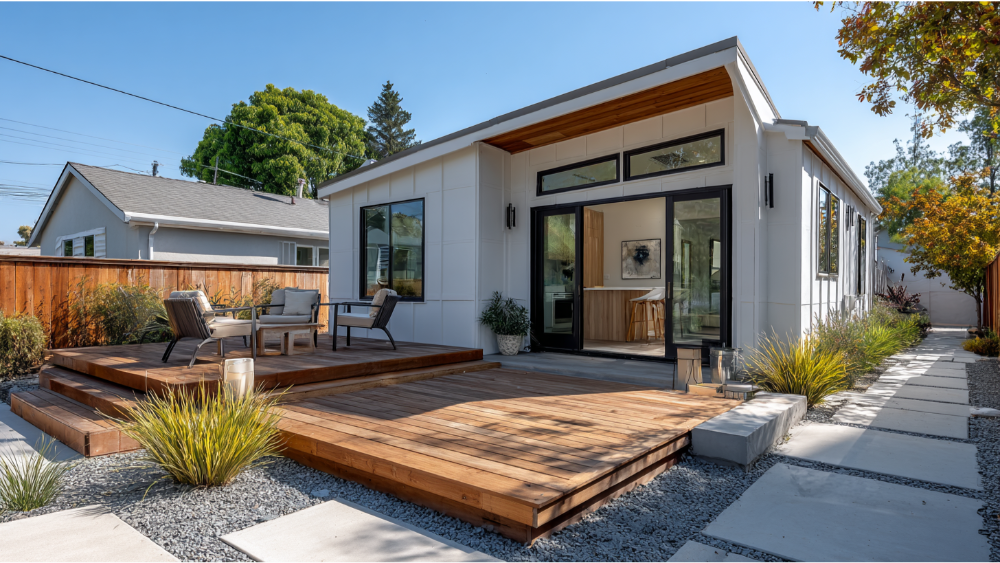
Understanding whether an accessory dwelling unit (ADU) can significantly increase overall property value is one of the most important questions for homeowners considering adding more functional space to their property. In California’s high-demand housing market, the answer to the question, “can an ADU increase overall property value significantly,” is consistently yes, but the scale of the increase depends on design quality, permitting, location, and especially the ability of the unit to generate rental income.
A well-executed accessory dwelling unit can increase property value by approximately 16–35% or more in many cases, particularly when properly integrated into the existing home and aligned with local housing demand. This guide breaks down how and why that increase happens, and what homeowners should consider before starting an ADU project.
What Is an Accessory Dwelling Unit and Why It Impacts Property Value
An accessory dwelling unit is a secondary residential structure located on the same lot as a primary residence. It can be a detached ADU, an attached ADU, or a garage conversion ADU that transforms existing space into functional living space. Each type adds additional living space to the same property, increasing its utility, flexibility, and overall appeal.
- Detached ADU: A standalone structure built in the backyard of a single-family home.
- Attached ADU: An extension from the main house.
- Garage Conversion ADU: Uses existing structures to create livable square footage without full new construction.
These different formats influence construction costs, rental income potential, and overall property value impact. Adding an ADU increases livable space and effectively turns unused or underutilized square footage into income-generating housing. In areas with high housing demand and ongoing housing shortage conditions, properties with additional living space become significantly more attractive to potential buyers.
Understanding Accessory Dwelling Units in Today’s Housing Market

An accessory dwelling unit is no longer viewed as a simple home improvement. Many homeowners use an ADU add strategy to increase property value while also creating space for family members, adult children, or long-term tenants. Others use it as guest space or convert basements into basement apartment-style units depending on zoning laws and building codes.
Common conversion ADUs include garage conversion projects, basement conversions, and attached structures built onto an existing home. These conversion ADUs maximize existing space and reduce the need for extensive new construction while still delivering meaningful increases in property value.
Why Appraisers Value ADUs Differently
Appraisers evaluate accessory dwelling units based on more than just square footage. They consider rental income, livable square footage, and whether the unit is a legal ADU built with proper permits. A permitted ADU is more likely to be fully included in valuation models.
In many cases, an ADU increase property outcome occurs because the property is reclassified from a standard single-family home into a hybrid income-producing asset. This shift allows the property to reflect both physical space and income potential, which directly affects market value.
How Much Value Can an ADU Add to a Home?
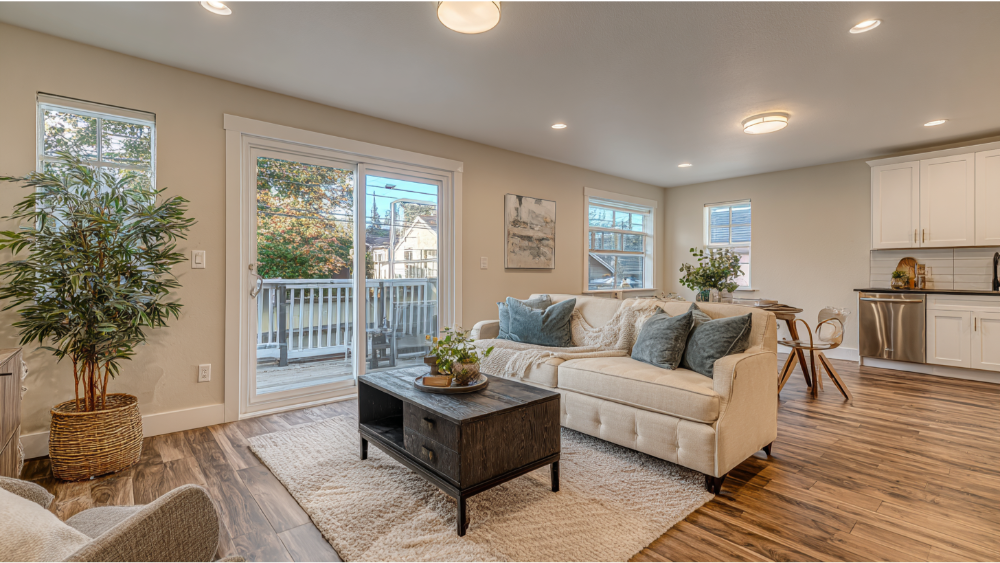
The amount of value added by an accessory dwelling unit varies, but most California properties experience a meaningful increase in property value when an ADU is properly designed and permitted. On average, homeowners see increases ranging from 16–35%, depending on the type of unit, rental income potential, and overall market conditions.
A garage conversion ADU may provide a lower upfront cost but still deliver strong return on investment, while a detached ADU typically provides the highest long-term appreciation due to privacy and rental demand.
Average Property Value Increase in California
In California housing markets with high housing demand, adding an ADU often leads to a substantial increase in property value. Detached ADUs generally produce the highest appreciation due to strong rental income potential and independence from the main house. Attached ADU configurations provide stable value increases, while garage conversion ADU projects are often the most cost-efficient path to higher property value.
The combination of livable space and income potential is what drives the increase. Properties with conversion ADUs consistently outperform similar homes without additional living space in competitive housing markets.
Rental Income and Income-Based Valuation
One of the strongest drivers of property value is rental income. When an accessory dwelling unit generates rental income, it becomes part of the property’s financial performance. Appraisers often use income-based valuation methods to determine how much value the property adds.
A detached ADU that produces consistent monthly rental income can significantly increase property value compared to a similar primary residence without additional units. The ability to generate rental income from the same property is one of the most powerful financial advantages of an ADU.
The valuation formula often used is:
V = R / i
Where V is value, R is rental income, and i is the capitalization rate. This illustrates how rental income and capitalization rates are used to calculate value in income-producing real estate, including properties with accessory dwelling units.
Key Factors That Influence Value Growth
Several factors determine how much an accessory dwelling unit increases property value. These include construction costs, square footage, zoning laws, and building codes. Proper permits are essential because unpermitted units often fail to fully contribute to valuation.
Detached units tend to generate the highest appreciation, while garage conversion ADU projects provide strong efficiency due to lower construction costs. The quality of livable space and how well it integrates with the existing home also plays a major role in determining final value.
Types of ADUs and Their ROI Differences
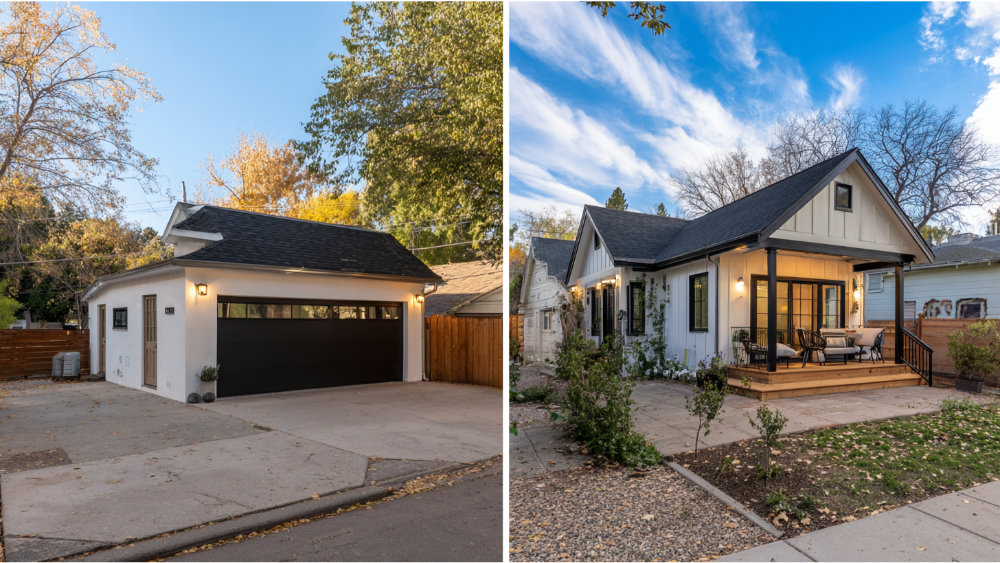
Different conversion ADUs produce different financial outcomes depending on structure type, design efficiency, and income potential. Understanding these differences helps homeowners maximize return on investment on the same lot.
Detached ADUs
A detached ADU is one of the most valuable types of accessory dwelling units. As a standalone structure built in the backyard, it provides privacy, independence, and strong rental income potential. Detached units are especially attractive in rental markets and often deliver the highest increase property value results.
Detached ADUs also function well as guest house rentals or long-term housing for tenants, making them highly versatile assets.
Garage Conversion ADU Projects
A garage conversion ADU is one of the most cost-effective ways to create additional living space. By converting existing space, homeowners reduce construction costs while still gaining functional living space that can generate rental income.
Garage conversion projects are widely used because they allow homeowners to increase property value without major new construction. These units often deliver strong ROI due to lower upfront costs and steady rental income potential.
Attached ADUs and Basement Conversions
An attached ADU is built directly onto the primary home and provides additional living space while maintaining structural connection to the main residence. Basement conversions also serve as conversion ADUs, transforming underused square footage into functional basement apartments or in-law suites depending on design.
These options are often ideal for family members or adult children, and they still provide meaningful increases in property value when properly designed and permitted.
Real-World Scenarios of ADU Value Increase
In real-world situations, adding an ADU can significantly change how a property performs in the housing market. A detached ADU that generates steady rental income improves buyer interest and strengthens overall valuation. A garage conversion ADU can transform unused space into a rentable unit, increasing both income and property appeal.
In both cases, the property becomes more competitive because it offers more livable space and stronger income potential than similar homes in the same housing market.
What Can Limit ADU Value Growth?

While an accessory dwelling unit can significantly increase property value, certain factors may reduce its impact. Unpermitted construction, poor design, or failure to comply with zoning codes and local regulations can limit valuation benefits.
If an ADU is not properly integrated into the existing home or lacks efficient use of square footage, its contribution to property value may be reduced. Construction quality and compliance with building codes are essential for maximizing return.
ADU Appraisal Process Explained
Appraisers evaluate accessory dwelling units using comparable sales, cost approach, and income-based methods. A legal ADU built with proper permits is more likely to be fully recognized in valuation models.
Factors such as utility connections, square footage, and livable square footage all play important roles in determining final value. Detached ADUs and garage conversion ADU projects are often compared to similar properties within the local housing market to determine accurate market value.
How to Maximize ADU Property Value

To maximize property value, homeowners should focus on smart design, efficient use of existing space, and strong rental income potential. A well-planned ADU add strategy ensures the accessory dwelling unit contributes meaningfully to both livability and financial return.
Detached ADUs typically perform best in terms of rental income, while garage conversion ADU projects offer excellent cost efficiency. In both cases, high-quality construction and thoughtful design significantly increase property value.
ADU Investment vs Traditional Home Improvements
Compared to traditional renovations, an accessory dwelling unit provides stronger long-term financial benefits. While kitchen remodels and interior upgrades improve comfort, they do not generate income. In contrast, an ADU investment creates additional living space that can generate rental income while also increasing property value.
This combination of income and appreciation is why many homeowners prioritize conversion ADUs over standard remodeling projects when planning long-term improvements.
FAQs About ADUs and Property Value
Does an ADU increase property taxes?
Yes, adding an ADU typically increases property taxes because local governments reassess the property’s value based on the additional livable square footage and the ADU’s assessed value. However, the increase usually reflects only the added value from the ADU, not the entire property.
How much extra living space does an ADU provide?
An ADU adds additional livable square footage to your property, ranging from a few hundred to over a thousand square feet depending on the type and design. This extra space can be used for rental income, guest accommodations, or family members.
Can a basement conversion ADU add significant value?
Yes, a basement conversion ADU can increase property value by transforming underutilized space into a fully functional living area with its own kitchen and separate entrance. While it may add less value than a detached ADU, it is a cost-effective way to boost your property’s potential.
Does having a separate entrance affect ADU value?
Absolutely. An ADU with its own entrance enhances privacy and independence, making it more appealing to renters and buyers. This feature often contributes to higher rental income and additional value.
How does potential rental income impact property value?
Potential rental income from an ADU is a major factor appraisers consider when assessing additional value. The ability to generate extra income can boost the property’s market appeal and justify a higher valuation.
Are there ongoing costs associated with owning an ADU?
Yes, owning an ADU can increase property taxes, insurance premiums, and maintenance expenses. It’s important to factor these costs into your financial planning when considering an ADU project.
Conclusion
Adding an accessory dwelling unit can significantly increase your property’s overall value by providing additional livable square footage, boosting potential rental income, and enhancing your property’s flexibility. Whether you choose a detached structure, attached addition, or a basement or garage conversion, a well-designed and permitted ADU can offer a strong return on investment. By carefully considering design, local regulations, and rental potential, homeowners can maximize both the financial and lifestyle benefits of their ADU, turning extra space into lasting value.